WXYZ ‘FUTURESONIC’ Jingles on MOTOR CITY RADIO FLASHBACKS
WXYZ-AM | “Action Radio” | 1963-1964
FUTURESONIC PRODUCTIONS, DALLAS, TX
_______________
According to renown radio historian and master jinglecologist Ken R., Futuresonic “rivaled PAMS for creative output in the late 1950s and early 1960s.” In this featured presentation you will hear a Futuresonic sampler for WXYZ 1270, Detroit, circa 1963-1964.
Futuresonic also created jingle packages for Detroit’s WWJ in the early 1960s.
_______________
The featured Futuresonic WXYZ jingle package was audio remastered by Motor City Radio Flashbacks
_______________
Note: On our site’s Facebook page, according to WXYZ’s Lee Alan, this featured Futuresonic jingle sampler was not used on WXYZ in 1963 nor in 1964.
JIM HAMPTON (Last Show) | DATE:FRIDAY, JANUARY 20, 1967
— SPECIAL ACKNOWLEDGEMENT —
_______________
NEW! A special THANK YOU to Jimmy Hampton, of Cathedral City, California, for recently donating his 1967 (very last show) WXYZ radio aircheck to the Motor City Radio Flashbacks archives.
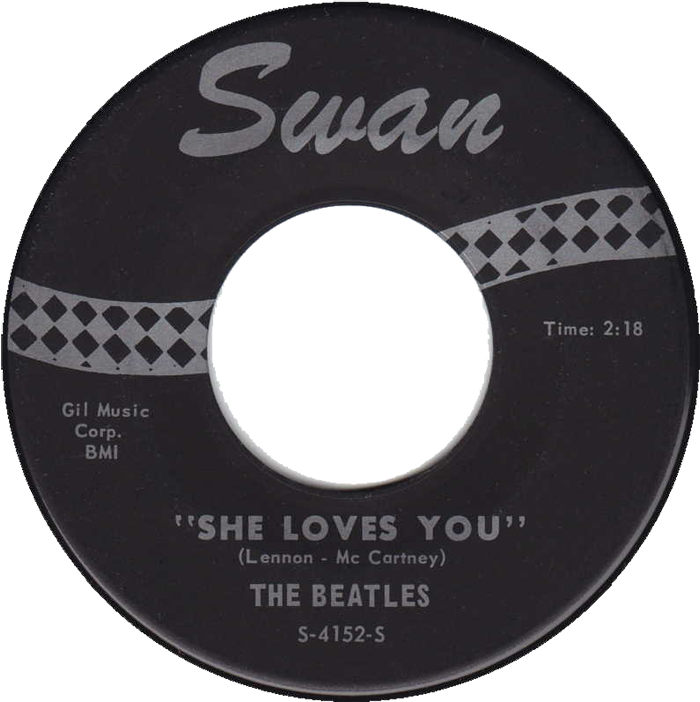
Debuted #69 week-ending January 25, 1964, 3 weeks playing the Billboard Singles chart, “She Loves You” climbs to #7, this week, February 2 through (week-ending) February 8, 1964.
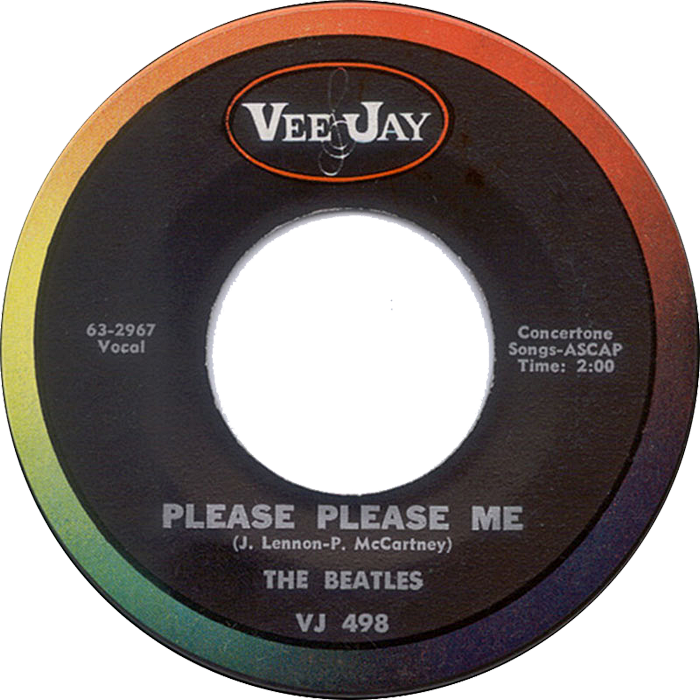
Debuted #68 week-ending February 1, 1964, 2 weeks playing the Billboard Singles chart, “Please Please Me” climbs to #57, this week, February 2 through (week-ending) February 8, 1964.
Released October 26, “What’s Easy For Two Is So Hard For One” peaked at #8 (charted 21 total weeks R&B overall) on the Billboard R&B chart in 1963 into 1964. B-side: “You Lost The Sweetest Boy”
The station began broadcasting on May 4, 1960, as WABX, beginning as a classical music station before adopting the MOR format in 1964. For a short period beginning in August 1967, the station adopted an all-girl jock policy during the day, playing jazz-oriented pop music and humorous bits. The idea came from Mickey Shorr, who was program manager and creative director of Century Broadcasting Corp., the station’s then-owner.
During the Fall of 1967, WABX began airing a new music show called “Troubadour” from seven to eight in the evening, hosted by station manager John Small. The show featured blues, folk, and rock music. During this time, WABX was still airing an MOR format, with an emphasis on up-tempo music from artists like Mel Tormé, Frank Sinatra, Nancy Wilson, and Joe Williams.
The strong, positive response generated by “Troubadour” was enough to convince the station’s owners to adopt a full-time progressive rock format. On February 1, 1968, “play lists” of acceptable tunes went out: the DJs picked their own music, and Century Broadcasting Corporation bit its tongue. With a free form progressive rock format, WABX became a springboard for the new music that no other station in the market (least of all CKLW and the other Top 40 stations) would touch.
The format, once having been branded in the media as an “aural absurdity”, the ABX revolution was one of style as well as sound. The station made itself a community catalyst for fun: free concerts and movies, kite-flys, bike-ins, and conferences.
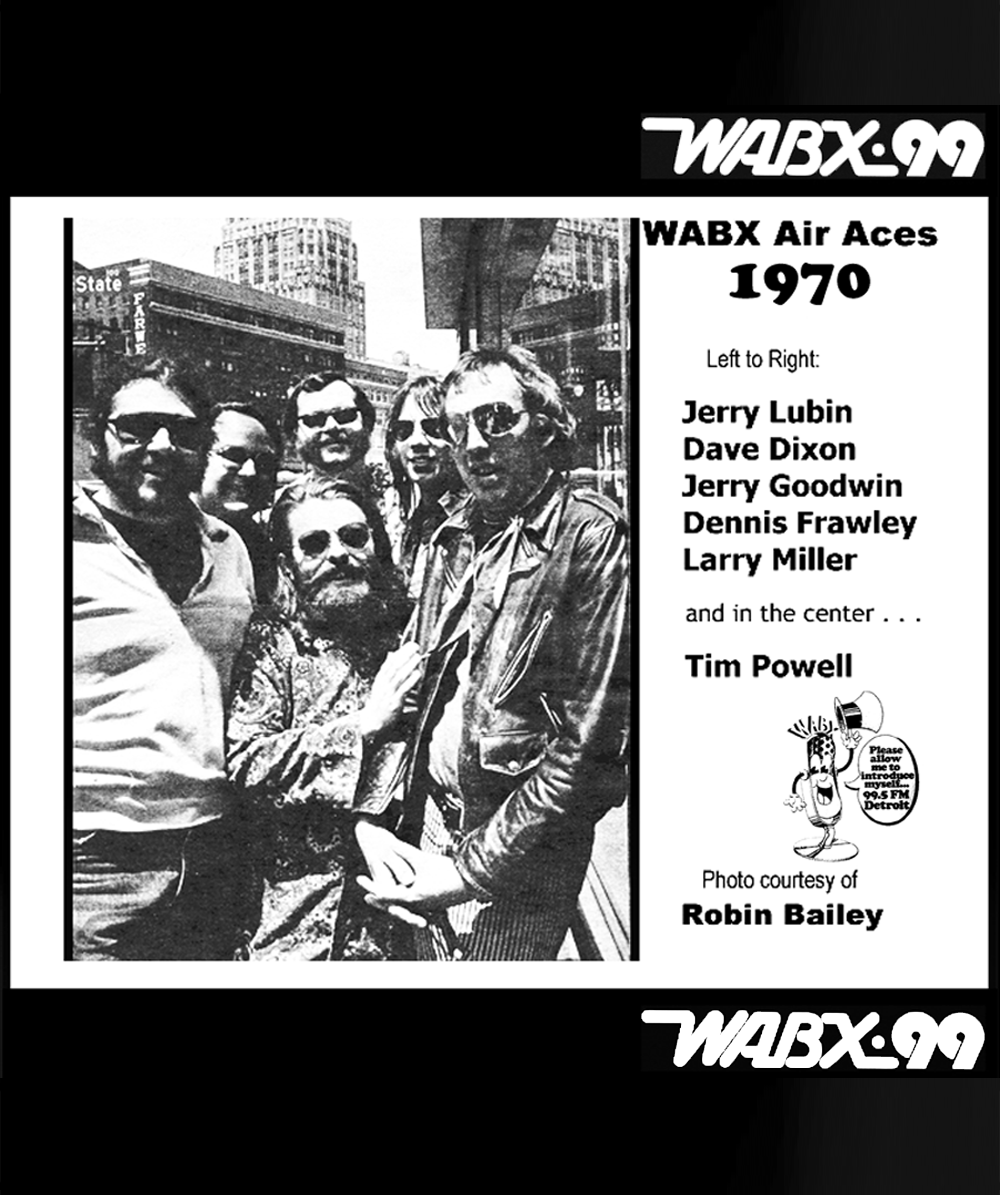
Also, the station played a role in giving many artists the recognition that they did not have at the time, including The Doors, Jimi Hendrix, Cream, Iron Butterfly, and The J. Geils Band. The success of WABX inspired other Detroit stations such as WKNR-FM and WXYZ-FM to adopt the progressive-rock approach. “Air Ace” Dave Dixon was a musician himself who co-wrote the Peter, Paul and Mary hit “I Dig Rock and Roll Music.”
During the 1970s, WABX evolved into a more mainstream album oriented rock station, albeit one that took a softer, more laid-back approach than its competitors.
The station was branded as “WABX 99” during this era with a logo similar to the one used by the current WABX in Evansville, Indiana, featuring yellow lettering on a black background. The station’s studio also moved from its original location in the David Stott Building in downtown Detroit to a new facility in suburban Oak Park during this period.
By 1982, WABX was third-ranked out of three AOR stations in Detroit (behind WRIF and WLLZ). Century Broadcasting sold the station to Liggett Broadcasting that year. Under new program director Paul Christy, WABX shifted from AOR to “Hot Rock,” a Top 40/rock hybrid (known on the air as “Detroit’s New Music“), playing a wide variety of new wave, pop, rock and urban product with a slick, CHR-style presentation.
However, the station’s market share continued to decline throughout 1983, and a little over a year after WABX debuted “Hot Rock,” Liggett decided to change the station’s format and calls.
On January 9, 1984, WABX’s long-term reign as a high-rolling rock station came to an end with the song “When the Music’s Over” by The Doors, after which the station became “Class FM“, WCLS, with a soft rock format. However, the adult contemporary field in Detroit was as crowded as the rock format had become, and “Class FM” was not successful. At this same time, the station was sold to Metropolis Broadcasting.
FIFTEEN WEEKS on the singles chart, “I Want To Hold Your Hand” by The Beatles peaked at #1 this week (7 weeks overall) on the Billboard Hot 100. Week ending, February 1 through week ending March 14, 1964. (Source: Billboard)
For our previous Billboard 1964 Number One U.S.A. Hits goHERE