WWWW-FM CHANGES FORMAT FOR 1970 . . . JULY 25, 1970

From the MCRFB NEWS archive: 1970

WWWW To Add Oldies With Current Hits


Detroit — Though WWWW-FM is building an image here of being the solid gold station, general manager Don Barrett said that the heavy slate of programming will be current releases from the charts. Working slowing with national program manager Ken Dowe, who’s responsible for the programming of all the McLendon Broadcasting stations,  Barrett set up a format which hinges on two oldies to one current record.

All the oldies are slated for the personalities, though the deejays use their judgments in playing current hits. The current records are usually in the upper half of Billboard Hot 100 Chart or in the top 15 sellers in the city, although WWWW-FM will also play new releases such as Dionne Warwick’s “Your Own Backyard.”

The oldies will go back to 1951, and the station has a library that will permit it to go nine-days without repeating an oldie. This is why Barrett slates all of the oldies — so that when an oldie comes up, it comes up at a different time of the day. “Gee” by the Crow is just as good at 3 a.m. as it is at 3 pm., Barrett said. And, to create a consistent sound around the clock, the station doesn’t alter its sound during the “housewives” hours or the afternoon hours when teens and young adults are more prone to listen to radio.

The reason for the format change (WWWW-FM was a background music station until March 10) was that a study of ARB and Pulse figures showed the station was “fighting with too many stations for too small a piece of the audience pie,” Barrett said. Barrett, whose career includes serving as national program director of all McLendon stations, was most recently in sales in XTRA, a Tijuana station in which McLendon is involved in.

Deejays at the station include program director Ron Rose, Chuck Richards, Tom Michaels, Robin Seymour on weekends, and Tom Clay. Clay, who does the 5 – midnight stint on the station, comes in at 9 a.m. to start prepping his show, Barrett said — “the sign of a real pro.” In McLendon fashion, WWWW-FM is building a campaign around Clay that will include a two-week saturation spot schedule on local television.

The station recently gave away a gold-painted 1957 Chevrolet to help build its image and is now preparing to give away “Good Guys” sweatshirts because no other radio station has done it in Detroit for several years.

Oldies are separated in three different lists — A, going back before 1960; B, 1960 through 1964; C, 1965 through the present. Any time a pre-1960 record is played, the next record is from the “C” list, said Barrett, so that the sound don’t stay too long in the distant past. END

___

 (Information and news source: Billboard; July 25, 1970)


A MCRFB Note: You can watch a video with Don Schuster on WWWW-FM, December 25, 1970, in a previous MCRFB (February 20, 2012) feature by going HERE.


Loading

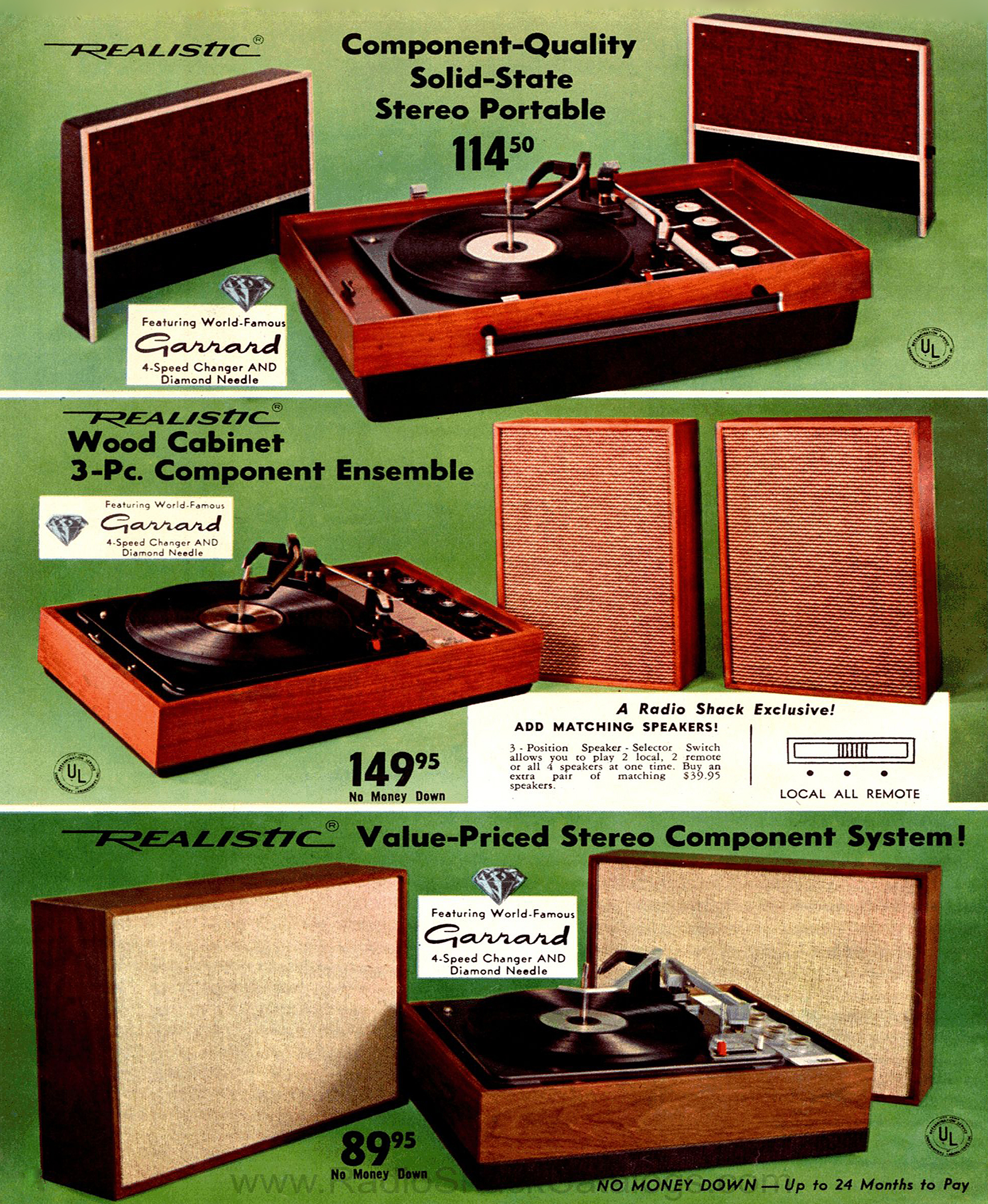
CONSUMERS STEREO ELECTRONICS, ’67: RADIO SHACK

RADIO SHACK CATALOG 1967

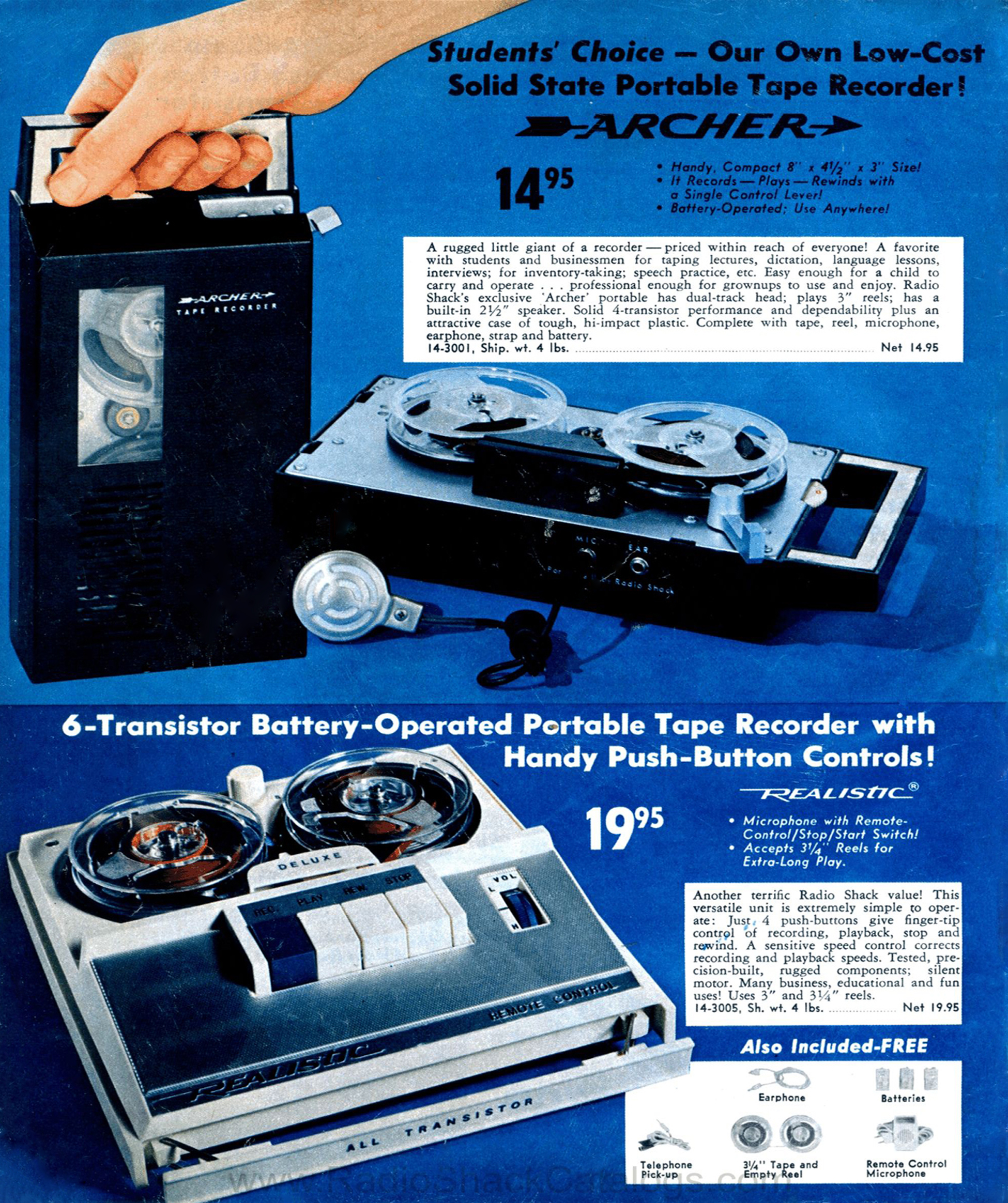
RADIO SHACK CATALOG 1967

RADIO SHACK CATALOG 1967

RADIO SHACK CATALOG 1967

CONSUMER ELECTRONICS 1967

___

50 YEARS AGO

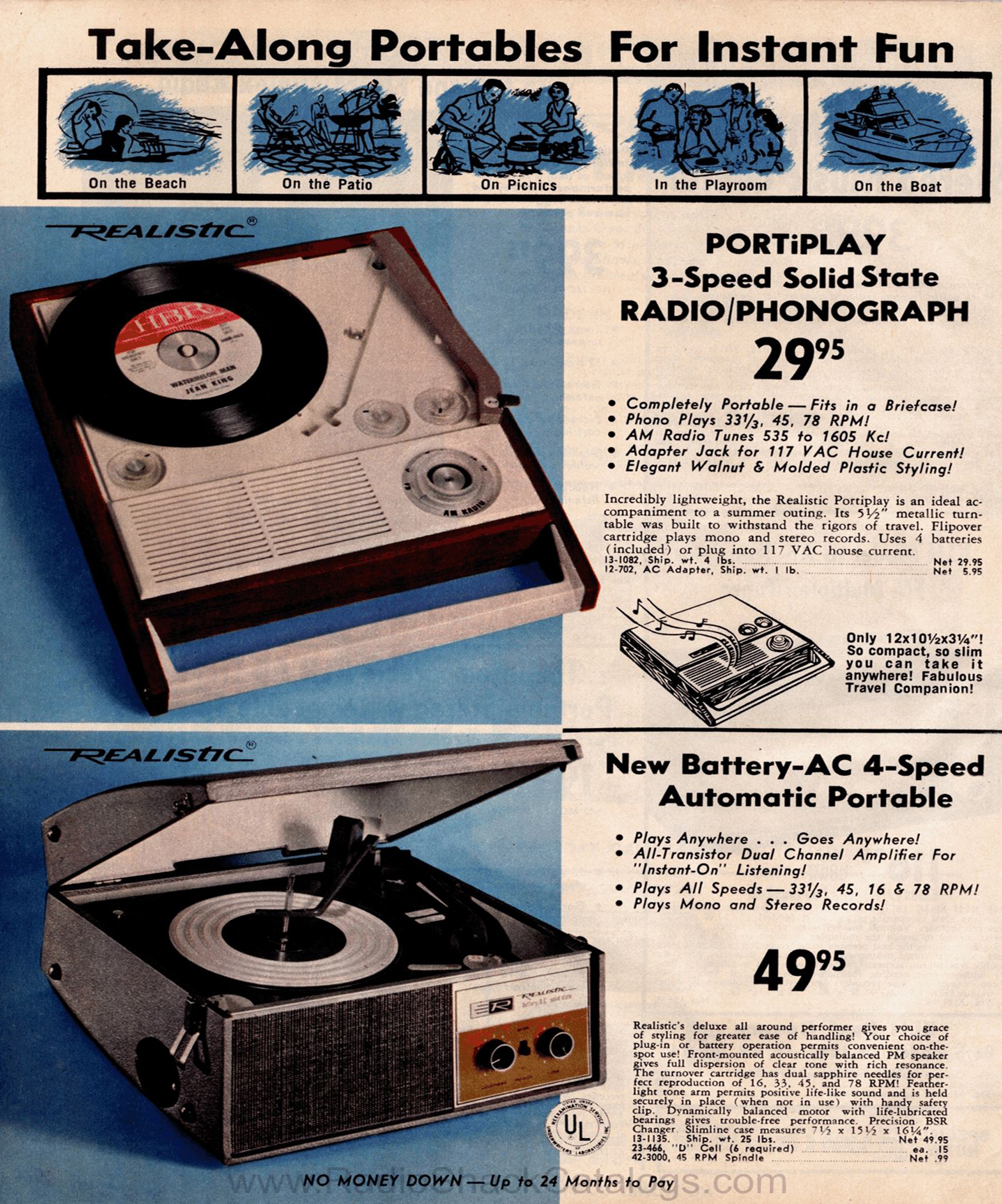
Tape recorders. Home stereo components. Portable record players. Transistor radios.

A look back at some of the ’60s electronics American consumers were buying from the Radio Shack chain, 1967. These four product pages were taken from the Radio Shack catalog, from that year.

Motor City Radio Flashbacks found an amazing website online where you can view the entire archived Radio Shack publications — where you can view page-to-page — every single catalog from 1936 to 2005.

It’s a decades’ electronic blast from the past you’ll enjoy viewing. Check it out! 🙂

radioshackcatalogs.com


A MCRFB viewing tip: On your PC? For a larger detailed view click above image 2x and open to second window. Click image anytime to return to NORMAL image size.

Click your server’s back button to return to MCRFB.COM home page.


On your mobile device? Tap on image. Open to second window. “Stretch” image across your device screen to magnify for largest print view.


Loading

GAVIN REPORT: MERIT RATING IS IMPORTANT . . . DECEMBER 5, 1964

From the MCRFB NEWS archive: 1964

The Bill Gavin Newsletter  December 5, 1964


From the Desk of Bill Gavin  Billboard Contributing Editor


MANY YEARS AGO, before radio and television brought the World Series into our homes, some of our metropolitan newspapers would display large scoreboards high on their buildings so that the inning-by-inning progress could be followed by all who cared to wait and watch. Large crowds of baseball fans would cluster around, and as each inning was posted there would be cheers or groans, depending on prevailing sympathies.

The impatient anxiety with which many radio people await each succeeding Pulse or Hooper report is reminiscent of those baseball fans a half century ago. The audience measurement surveys keep the score; they report who is winning; they tell the station manager and his program director whether their programming was good; they tell the advertiser how large an audience he can expect for his commercials on each and every station. There is a saying among radio people that “you live and die by the numbers.”

Of course, there are many people in radio – probably a large majority – who take a fairly detached view of audience measurement reports. They are experienced professionals enough to know, without outside numerical reassurance, that they are doing a good job on the air, that they are attracting a fairly substantial audience, and that their station’s position in the local community and in the advertising world is reasonably secure.

It is demonstrably true that in many cities there are frequent and large fluctuations in shares of audience among some of the leading stations. It is small wonder that such wide swings of station popularity promote strong feelings of insecurity, among the leaders as well as among those whose turn it may be to fall behind. It is also true that in other cities, such frequent fluctuations in shares of audience are comparatively unknown. There must be a reason.

PROBABLY A MAJOR cause of the impatient instability that pervades radio competition in certain cities is the tradition of explosive popularity surges that has become associated with pop format stations. New or vastly improved format operations have in the past moved into a number of cities and have taken over an impressive rating leadership in a few short months. It has become an ingrained attitude in format radio that the right combination of tested ingredients – the right music, the right DJ’s, the right promotions – will automatically produce a winner. it has worked many times in the past. When it fails to work now, the assumption is likely to be that there is something wrong with the ingredients. More money is poured into bigger prize contests and into higher priced disk jockeys. This works for a month or two, until the competition follows the same course, and the rating pendulum swings again.

The obvious fallacy in this kind of thinking is that it fails to look beyond the ingredients. It fails to note that stations holding a fairly stable rating position have built up a large following whose loyalty is practically impervious to the competitive blandishments of big prizes and high-powered disk jockeys. It fails to see that a station’s position of respect and acceptance in a community is based on more long-term objectives than can be met by DJ’s, prizes, records and production.

We expect a good disk jockey to put on a consistently good show. We expect that our contests and promotions will attract a certain amount of attention. We expect that skillful selection of music, plus sharp production, will make our stations more attractive to more listeners. But if we limit our expectations exclusively to what is broadcast on the air, we are neglecting opportunities to build listener loyalty-something that grows out of the station’s non- broadcast activities in the community.

SHORT-SIGHTED MANAGERS conceive of public service only as a certain amount of air time devoted to non-commercial announcements that are placed to their credit by the FCC. More thoughtful managers encourage their air personalities to take an active part in community affairs – to work with schools, churches, charities and law enforcement agencies in all things that benefit the community. They don’t wait to be invited, they create new ways to participate, new activities to sponsor.

Radio has been called “the constant companion.” By definition, we have the right to expect our companions to be something more than pleasant, amusing, exciting or entertaining. We ask also that they be interested in us as people. Too many station managers are interested in their listeners only as numbers in a rating survey, and their stations reflect this attitude in their entire program output. It is small wonder that their brittle, superficial appeal is easily broken by an aggressive competitor.

A loyal audience is a valuable asset. It can’t be bought. It can’t be persuaded. It must be deserved. END

___

 (Information and news source: Billboard; December 5, 1964)


Loading