CHICAGO — “Detroit is supposed to be one of the worst places in the country for women to get ahead … except in radio and television,” says Maureen Hathaway, station manager of Motor City top 40 WHYT-FM.
Hathaway is one of a large number of women holding top executive positions in Detroit radio –– vice president /general managers, station managers, general sales managers, even owners. Radio is a business whose key jobs are generally held by men, and Detroit is widely perceived as a two-fisted, blue collar city. Yet women there have been able to make a more than significant mark in the upper echelons of radio.
“The radio market here is [one of the most] competitive in the country,” observes Elaine Baker, VP/ GM of adult contemporary WOMC-FM. “Because of that, talent is recognized for what it is. Women have been able to move up the ladder be- cause they’re good.”
Both Hathaway and Vicky Trondle, general sales manager of WNIC-AM-FM, surmise that Detroit radio is such fertile ground for women executives because extensive station turnovers in the recent past have cleared the way for capable, talented women.
“One of the biggest problems for women had been lack of opportunity,” says Hathaway. “Men were holding jobs they’d always held, but when turnovers occurred, women were there to take those jobs.”
Trondle adds, “It took a long time for women to get the type of experience it takes to run a large business.”
Trondle was promoted to GSM when her predecessor left to join former WNIC GM Lorraine Golden, who had formed her own company. Golden is now VP of Metropolis Broadcasting and VP /GM of its first property, the top 40 /AC for- matted WDTX.
The turnover theory doesn’t hold for Verna Green, VP /GM of urban outlet WJLB-FM, who brought the station from a No. 12 overall rating when she joined in 1982 to its current No. 2 status. She says, “Women had the least seniority, and so were the first to go.”
Green’s prior experience in the automotive industry left her with the perspective that the male concentration there and in Detroit’s other heavy industries “gave women other ways to achieve.”
“For women to excel in this market place,” agrees Suzanne Gougherty, national sales manager of WWJ-AM, “they had to look in other areas.”
The majority of the city’s female executives started out not in the typing pool but in the sales department. “It’s the business aspect of the radio station,” observes Dougherty. “Working in sales gives you an awareness of the bottom line . . . and GMs have to be very aware of the bottom line . . . it gives an idea of the structure of the station.”
Operating in a predominantly man’s world, Detroit’s female execs nevertheless all agree they have faced little or no gender discrimination in their positions. “There has probably been some, but I’ve been too busy to notice,” remarks Green.
However, says Betty Pazdernik, VP and GSM of top 40 WCZY-AM-FM, “I still think we have to do a bit more, be superior, excel. If I felt like I wanted to have a tantrum, I wouldn’t do it,” she continues, “yet I’ve seen males fly off the handle, and it’s perfectly acceptable.”
“If I feel like crying from frustration, I’ll leave the office. But, men are allowed to explode for the same reason with no loss of esteem. It’ll probably always be like that.” All agree that their stations hire for excellence, not gender.
“I’m looking for the best person for a job, when I hire,” says Baker. “I had a female program director in 1983 [Lorna Ozman], and we have a famale sales staff – not because they’re women, but for their skills.”
Women applicants can look forward to advice and information on support groups when they go to WJLB, says Green. “We tell them to contact American Women in Radio & Television (AWRT), the Women’s Advertising Club in Detroit, Women In Music, and Women in Communications,” she describes. “We advise everyone, not just wornen, to read the trades and market reports. Women graduate as mass communications majors with no practical skills; we try to spread the word that if they’re considering internships, they can get them.”
Detroit’s women executives all stress that hard work, knowledge, desire, goal setting, risk taking, and dedication got them where they are. “Don’t be overly conscious of your difference,” advises WHYT’s Hathaway. “You can’t be a lone wolf and succeed. You’ve got to be a part of the system, teamwork and company loyalty, that’s what has traditionally gotten men ahead. A lot of women feel they have to be Joan of Arc, but that just reinforces differences. Being a team player does not mean selling out.” END
_______________
Information credit and news source: Billboard; April 25, 1986
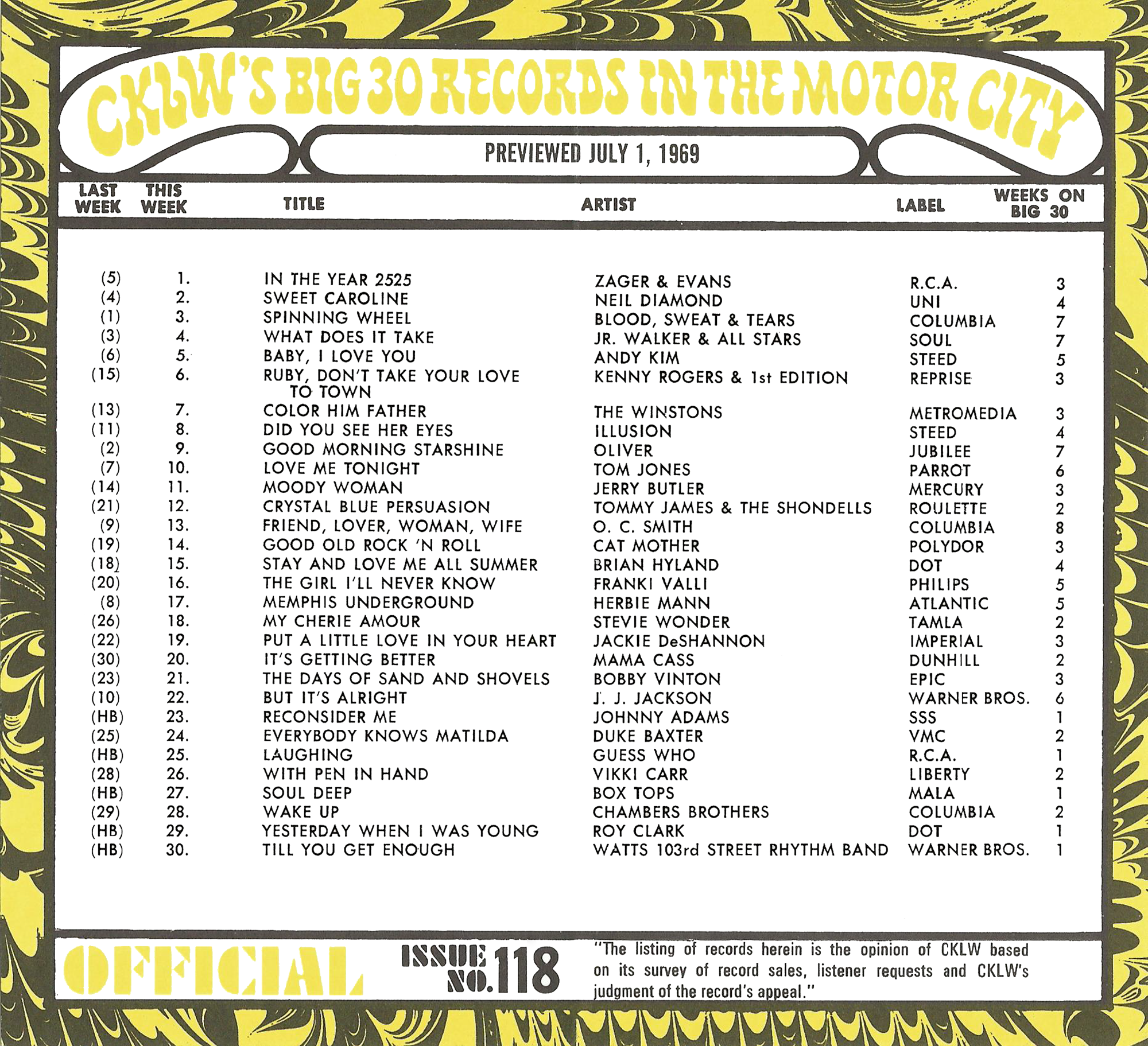
The year 1969 was one of the years, if not the only year, in which CKLW did not present their annual Top 100 or Top 80 year-end countdown. Instead, the Big 8 opted for the Top 100 Hits of the 1960s — closing out the decade — as CKLW prepared to usher in the 1970s.
For the first time ever — host Charlie O’Brien and Big 8 radio will present the hits of 1969 as they were featured on CKLW throughout that memorable year. Beginning with song 100, all the way to the number one song on top. The Top 100 Hits of 1969 playlist was tabulated from the weekly CKLW Top 30 Records charts and by CKLW historian Dave Kelly.
The CKLW Top 100 Hits of 1969 countdown resumes today, July 4 at 12 NOON., EST. Another exclusive presentation by Charlie O’Brien and big8radio.com . . . click the streaming link for the broadcast HERE!
_______________
— BIG8RADIO.COM —
Catch big8radio.com LIVE on the streams HIFI radio app for IOS,HERE
FIFTEEN WEEKS overall on the singles chart, “I Get Around” by The Beach Boys peaked at #1 this week (2 weeks) on the Billboard Hot 100. Beginning June 28 through week ending, July 11, 1964. (Source: Billboard)
For our previous Billboard 1964 Number One U.S.A. Hits goHERE
“The listing of records herein is the opinion of CKLW based on its survey of record sales, listener requests and CKLW’s judgement of the record’s appeal.”
_______________
PREVIEWED FOR THE WEEK OF JULY 1 – JULY 7, 1969
The above CKLW chart was digitally restored by Motor City Radio Flashbacks
— A MCRFB VIEWING TIP —
ON YOUR MOBILE DEVICE? Tap over CKLW chart image. Open to second window. “Stretch” image across your device screen to magnify for largest print view.
ON YOUR PC? Click on all chart images 2x for largest print view.
— In MemoryofGeorge Griggs —
A SPECIAL THANK YOU
_______________
A sincere, thank you, Mrs. Patti Griggs. This featured presentation would have not been possible without your generosity, dedication, and your continuous support.
Above CKLW music chart courtesy of Mrs. Patti Griggs and the George L. Griggs estate.
WXYZ SALUTES DETROIT HIGH SCHOOLS | A-B-C | ’63-’64
THE WXYZ ‘PAMS’ HIGH SCHOOLERS!
_______________
In 1963, WXYZ commissionedPAMS of Dallas to create a plethora of outstanding jingles saluting all the high schools in the metropolitan Detroit area. They were aired mostly during the Detroit high school graduation season and were highlighted on WXYZ during the Detroit high school football seasons, 1963 and 1964.
At the time, WXYZ chose to tally every high school in alphabetical order on the Detroit map with their own jingle, from A through Z. The presented WXYZ jingle sampler was created for high schools lettered A, B, and C . . . from All Saints to Cody High.
Throughout the decades having passed since, many of the named schools recalled in this PAMS sampler, those institutions no longer exist today. But you just may find your high school’s ‘jingle’ played here — as they were selectively saluted on WXYZ radio, some 58 years ago.
_______________
NOTE: For all the other WXYZ High School tributes — 1963-1964 — you can find them archivedHERE
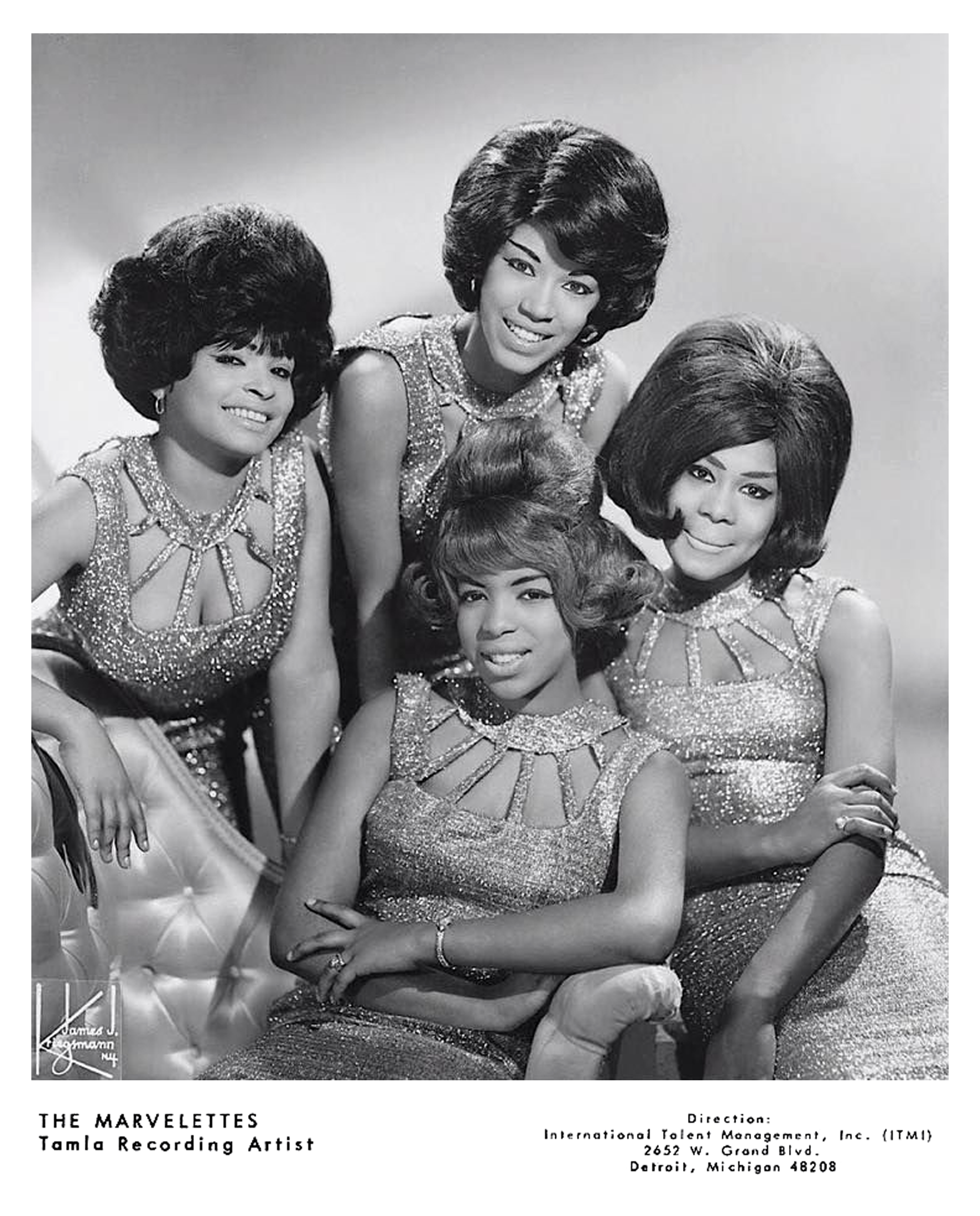
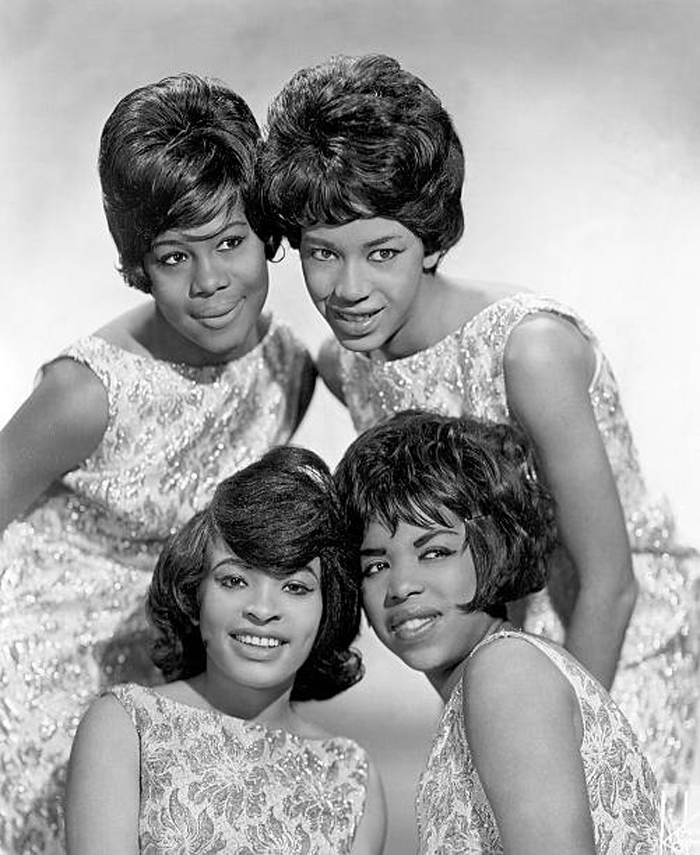
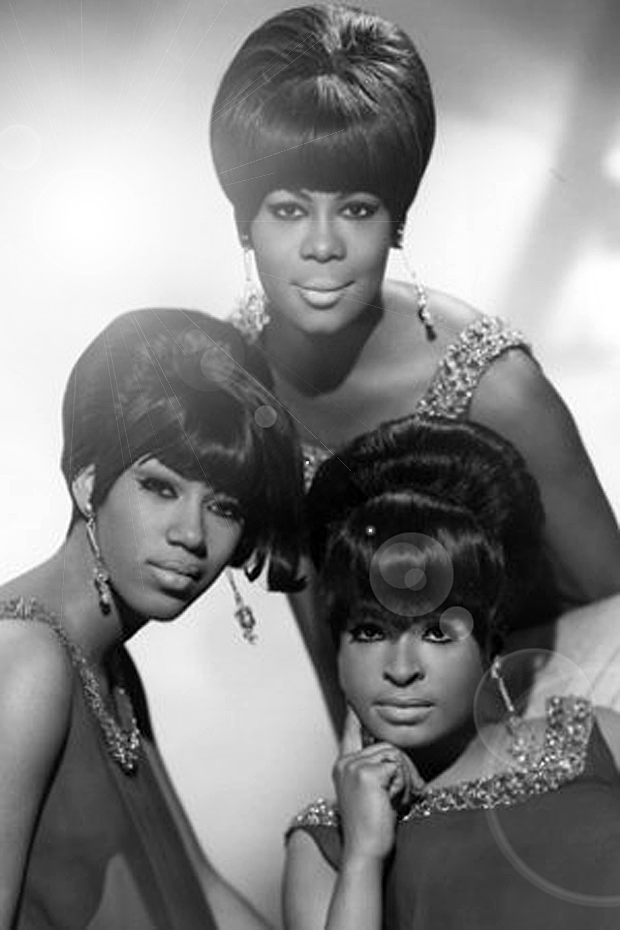
The Marvelettes was an American girl group that achieved popularity in the early-to mid-1960s. They consisted of schoolmates Gladys Horton, Katherine Anderson, Georgeanna Tillman, Juanita Cowart (now Cowart Motley), and Georgia Dobbins, who was replaced by Wanda Young prior to the group signing their first deal. They were the first successful act of Motown Records after the Miracles and its first significantly successful female group after the release of the 1961 number-one single, “Please Mr. Postman“, one of the first number-one singles recorded by an all-female vocal group and the first by a Motown recording act.
Founded in 1960 while the group’s founding members performed together at their glee club at Inkster High School in Inkster, Michigan, they signed to Motown’s Tamla label in 1961. Some of the group’s early hits were written by band members and some of Motown’s rising singer-songwriters such as Smokey Robinson and Marvin Gaye, who played drums on a majority of their early recordings. Despite their early successes, the group was eclipsed in popularity by groups like The Supremes, with whom they shared an intense rivalry.
Nevertheless, they managed a major comeback in 1966 with “Don’t Mess With Bill“, along with several other hits. They struggled with problems of poor promotion from Motown, health issues and substance abuse with Cowart the first to leave in 1963, followed by Georgeanna Tillman in 1965, and Gladys Horton in 1967. The group ceased performing together in 1969 and, following the release of The Return of the Marvelettes in 1970, featuring only Wanda Rogers, disbanded for good, with both Rogers and Katherine Anderson leaving the music business.
The group has received several honors including induction into the Vocal Group Hall of Fame, as well as receiving the Pioneer Award from the Rhythm and Blues Foundation. In 2005, two of the group’s most successful recordings, “Please Mr. Postman” and “Don’t Mess with Bill” earned million-selling gold singles from the RIAA. On August 17, 2013, in Cleveland, Ohio, at Cleveland State University, the Marvelettes were inducted into the first class of the Official Rhythm & Blues Music Hall of Fame.
The departure of Georgeanna Tillman and renewed success
By 1964, the majority of American vocal groups especially all female bands such as the Shirelles and the Ronettes started struggling with finding a hit after the arrival of British pop and rock acts. In the meantime, other Motown girl groups such as Martha and the Vandellas and the Supremes were starting to get promoted by Motown staff with the Vandellas becoming the top girl group of 1963. The following year, the Supremes took their place as the label’s top primary female group after a succession of hit recordings that year, culminating in the release of their second album, Where Did Our Love Go, which Motown was able to promote successfully. Some sources claim “Where Did Our Love Go” was turned down by the Marvelettes. Gladys recalls “When they played ‘Where Did Our Love Go’ they played ‘Too Many Fish In The Sea‘. We picked ‘Too Many Fish In The Sea’ because it had all the music and all the bongos. We were all together and said at the same time we didn’t want ‘Where Did Our Love Go’.”
The Marvelettes, 1966 Katherine Anderson, Gladys Horton and Wanda Young.
That year, the Marvelettes reached the top forty with the Norman Whitfield production, “Too Many Fish in the Sea”, reaching #25 with the recording. By now, Motown had begun its charm school hiring choreographer Cholly Atkins and Maxine Powell to refine the label’s acts. Atkins began polishing the Marvelettes’ dance moves while Powell taught the group to be more graceful, telling them and every other Motown act that they would “perform in front of kings and queens“. Meanwhile, two of the Marvelettes got married: Georgeanna Tillman married longtime boyfriend Billy Gordon of the Contours and Wanda Young married her longtime boyfriend Bobby Rogers of the Miracles changing her name to Wanda Rogers. By the end of 1964, Georgeanna Tillman, a longtime sufferer of sickle cell anemia was diagnosed with lupus. By early 1965, struggling to keep up with their stringent recording sessions and touring schedules and her illnesses, a doctor of Tillman’s advised her to leave performing for good. The rest of the Marvelettes carried on as a trio from then on.
In mid-1965, Wanda Rogers took over as lead vocalist, as Motown producers felt Rogers’ voice was more suitable for this role than Horton’s. With Rogers as lead, the group had a hit with “I’ll Keep Holding On“, which reached #34 while “Danger! Heartbreak Dead Ahead” settled for a #61 showing but was #11 on the R&B chart. Later in 1965, the group released the Smokey Robinson composition, “Don’t Mess with Bill“, which brought the group back to the top ten reaching #7 and becoming their second single to sell over a million copies. From then on, with Robinson mainly in charge, most of the Marvelettes singles would feature Rogers on lead. In 1966, they had a modest success with “You’re the One” and by the end of that year, they reached the top 20 with “The Hunter Gets Captured by the Game“, which Smokey had to fight to get released. In 1967, the group recorded the Van McCoy composition, “When You’re Young and in Love“, which had been originally recorded by Ruby & the Romantics. The song reached #23 in the U.S. and peaked at #13 in the UK, becoming their only British hit.
By 1967, Gladys Horton had reconsidered her involvement with the Marvelettes. After her first child, Sammie, was born with cerebral palsy, Horton decided to leave the group entirely, doing so before the release of the hit “My Baby Must Be A Magician“. The song peaked at #17 and was noted for featuring the Temptations’ Melvin Franklin providing the opening line. With Horton out, Harvey Fuqua introduced the group to Ann Bogan who became Horton’s replacement. However, by the time Bogan joined the group in 1968, most of the musicians of Motown’s early years had left, mainly due to financial disputes with the label. The group struggled with recordings after the release of “Magician“, with Motown offering little to no promotion. The 1968 singles “Here I Am Baby” and “Destination: Anywhere” were only modestly successful, peaking at #44 and #63 respectively. The release of their 1969 album, In Full Bloom, failed as did its only single, the remake of Dinah Washington’s “That’s How Heartaches Are Made“.
_______________
Information and credit source: “The Marvelettes” Wikipedia