NUMBER 1 IN AMERICA ’69* The Temptations * 10/12/69 – 10/25/1969
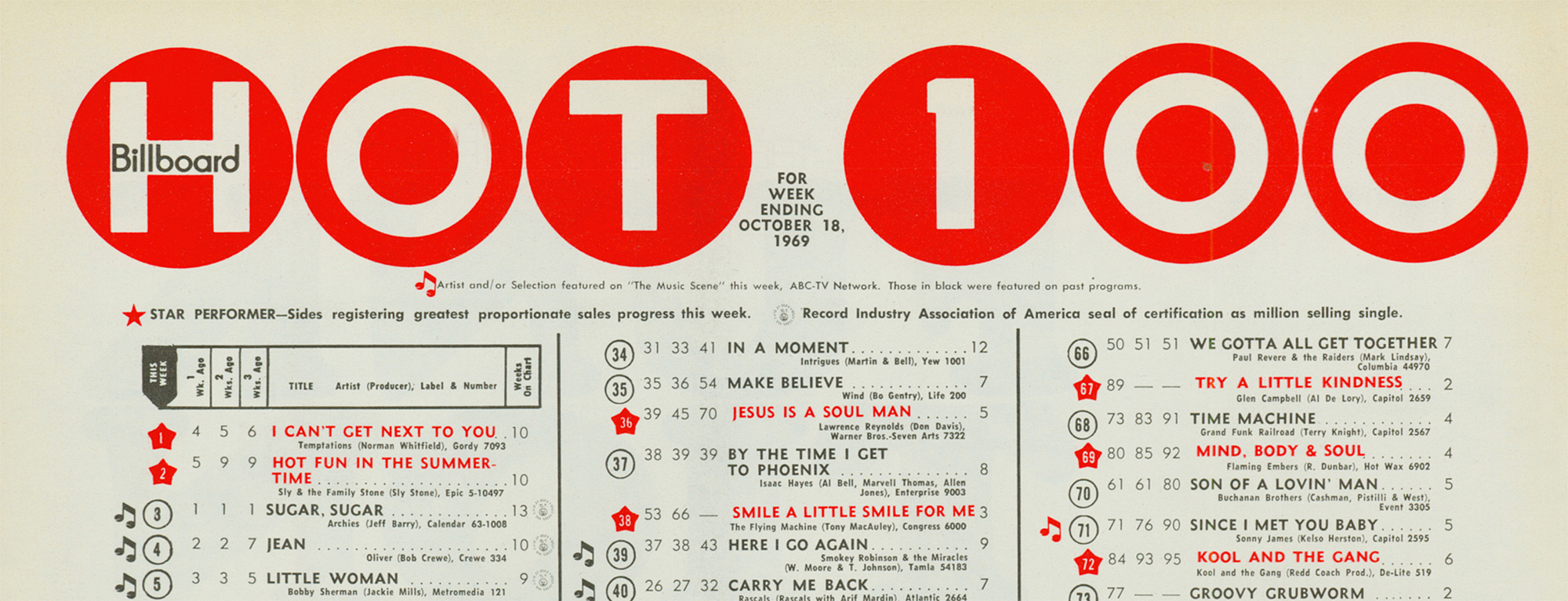
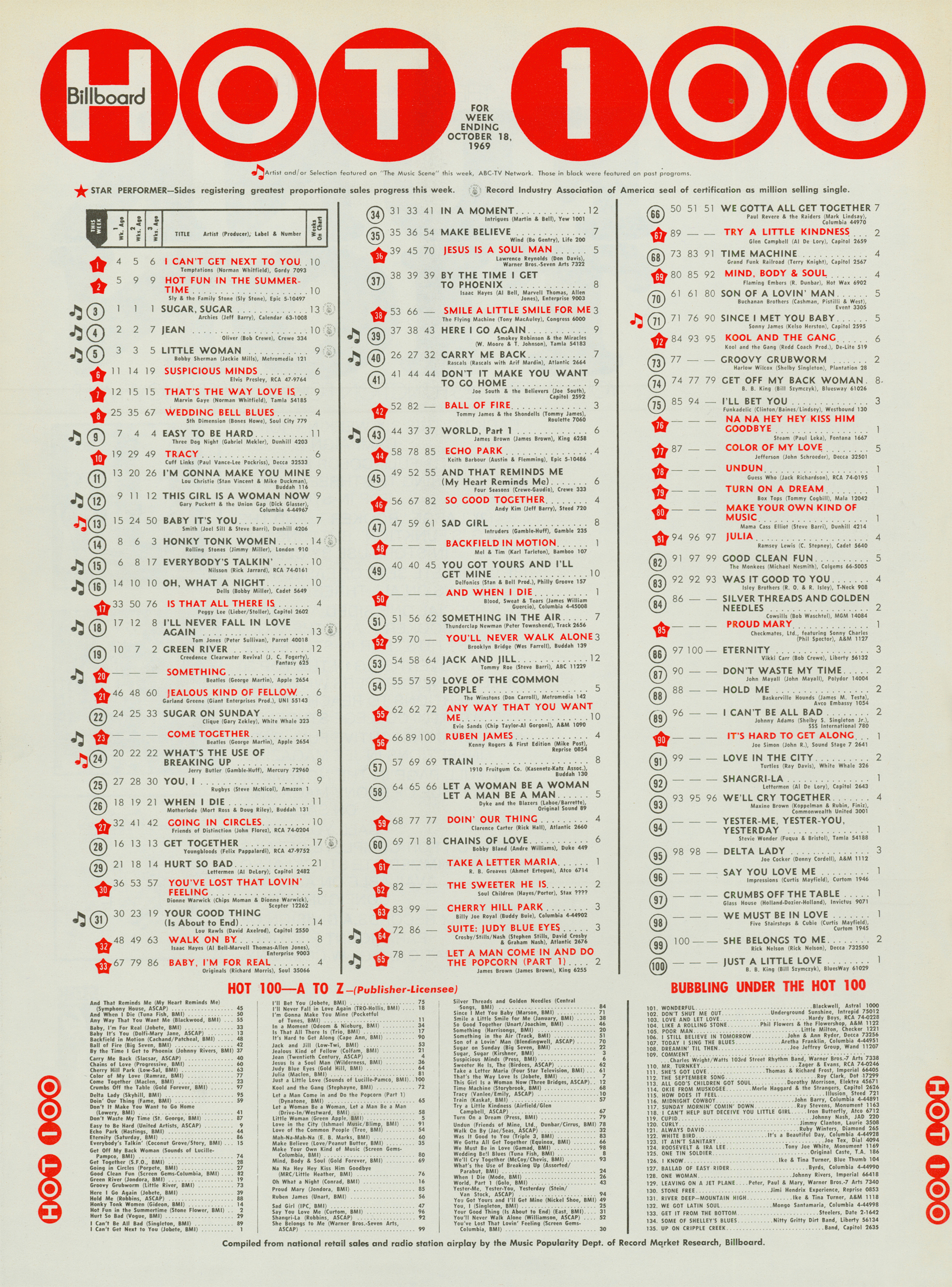
BILLBOARD HOT 100 TOP FIVE: WEEK-ENDING October 18, 1969
(Click on chart image 2x for detailed view)
NUMBER ONE FOR 1969!
___
SEVENTEEN WEEKS on the singles chart, “I Can’t Get Next To You” by the Temptations peaked this month at No. 01 (2 weeks) on the Billboard Hot 100. Week ending October 12 through October 25, 1969. (Source: Billboard)
___
MCRFB Link: For the previous No. 1 record in the U.S.A. 1969GO HERE.
BILLBOARD HOT 100 TABULATED BY RECORDS RETAIL SALES AND RADIO AIRPLAY
BILLBOARD HOT 100 OCTOBER 12-18, 1969
A MCRFB VIEWING TIP
ON YOUR PC?To fully appreciate this Billboard Hot 100 October 18, 1969 chart feature click on image 2x and open to second window. Click image anytime to return to NORMAL image size.
Click your server’s back button to return to MCRFB home page.
On your mobile device?Tap on chart image. Open to second window. “Stretch” chart across your device screen to magnify for largest print view.
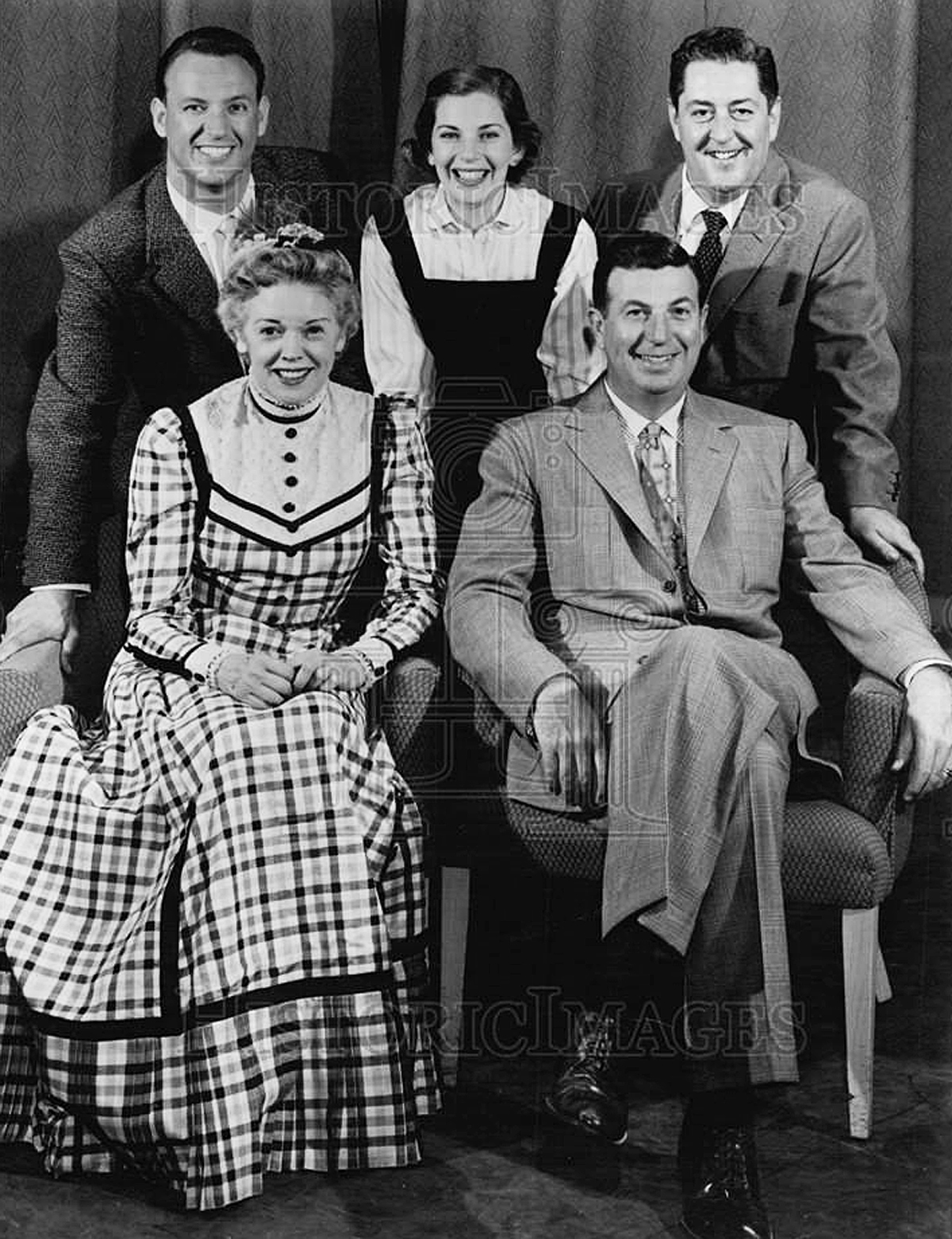
ABC RADIO WXYZ 1270 The Breakfast Club (Press Photo)1955
ABC RADIO The Breakfast Club WXYZ 1270
Fran Allison, Don McNeill, Dick Noel, Betty Johnson and the show’s humorous Sam Cowling. The Breakfast Club was a long-run morning variety show on NBC Blue Network/ABC radio (and briefly on television) originating in Chicago, Illinois.
Hosted by Don McNeill (right), the radio program ran from June 23, 1933 through December 27, 1968.
McNeil’s 35½-year run as host remains the longest tenure for an M.C. of a network entertainment program, surpassing Johnny Carson (29½ years) on The Tonight Show and Bob Barker (34? years) on The Price is Right.
Above article is courtesy freep.com newspaper archive. Copyright 2019. Newspapers.com.
The above WJBK newspaper feature was ‘clipped,’ saved, and imaged from the credited source by Motor City Radio Flashbacks.
A MCRFB VIEWING TIP: On your PC? You can read this entire article ENLARGED. For a larger detailed view click above image 2x and open to second window. Click image anytime to return to NORMAL image size.
Click your server’s back button to return to MCRFB.COM home page.
Missed any of our previous ‘Detroit Radio Back-Pages‘ features?GO HERE.
Above article is courtesy freep.com newspaper archive. Copyright 2019. Newspapers.com.
The above WKNR newspaper feature was ‘clipped,’ saved, and imaged from the credited source by Motor City Radio Flashbacks.
A MCRFB VIEWING TIP: On your PC? You can read this entire article ENLARGED. For a larger detailed view click above image 2x and open to second window. Click image anytime to return to NORMAL image size.
Click your server’s back button to return to MCRFB.COM home page.
Missed any of our previous ‘Detroit Radio Back-Pages‘ features?GO HERE.
Some Radio Stations Pulling Stops From Losing Adult Audiences to Current ‘Beatlemania’ Hysteria
NEW YORK – With the Beatles safely home after their record-breaking tour of the United States and Canada, broadcasters are mulling the cause and effect of “Beatlemania.”
In attempting to evaluate a phenomenon like the Beatles the inevitable question arises as to what caused the hysteria – the Beatle fans as a result of radio, or radio, under pressure of Beatle fans.
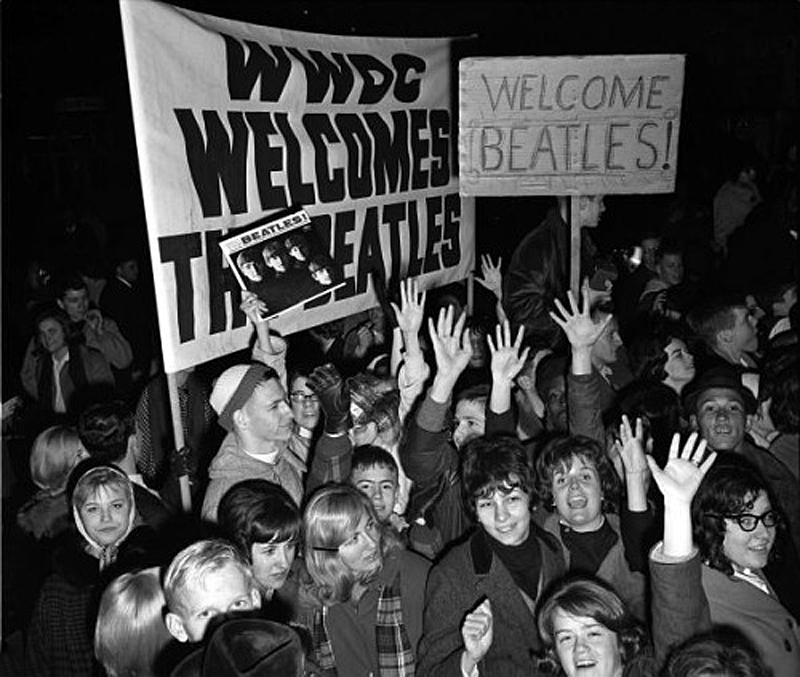
WWDC – Washington D. C. – welcomes the Beatles! February 11, 1964.(Click on image for larger view)
No matter who caused it, never before in the history of radio broadcasting has any group or individual from the entertainment world received such overwhelming support. Beatlemania struck radio with unprecedented impact, sending many thousands of hours of related programming into the airwaves.
The involvement by radio has gone far beyond the mere playing of Beatles records. Contests, promotions, extensive news coverage, pilgrimages to England, etc., became standard procedure.
The cities with more than one contemporary music-formatted station enjoyed (or cringed) as two or three stations battled to out-Beatle each other.
Radio programmers explain that the affair was not one of love alone, but an effort to cash in on what was mushrooming into the latest (and perhaps biggest) pop music craze ever to hit this continent.
Others argue that the mania is attributable primarily to the tremendous radio station involvement and identification with the Beatles. The “Monster” was of their own making.
Serious Drawbacks
Industry programmers caution that Beatlemania with its strong appeal to teenagers could result in driving away adults that enjoy contemporary pop pop music. It has also been noted by many the possibility that rhythm and blues and the more conservative music stations have attracted many listeners away from pop stations as a result of the latter’s preoccupation with the English sound.
Just how much good, or harm, the Beatles have done to radio is being measured. Programming executives are carefully watching station audience composition studies and the ratings to determine if the new seven to 12-year old listeners captured by Beatle broadcasting has resulted in a loss for contemporary music stations of adults.
The Beatles of Liverpool, like the Pied Piper of Hamelin, have a mysterious musical lure for even the smallest of tots. Why?
“It’s their honesty, in part, plus the fact that they look like cuddly dolls,” says producer Jack Good of ABC -TV’s “Shindig,” on which the Beatlemania of John, Paul, George and Ringo will resound Wednesday, Oct. 7.
Another ABC-TV show bows Saturday, Oct. 10 to the demand of Beatle fans. Dick Clark will present an all-Beatle program on the “New American Bandstand-’65,” including the pick of their latest recordings, a portion of their latest motion picture, several taped interviews procured from KRLA, Pasadena, and KRLA deejay Casey Kasem’s recording of “A Letter From Elena.”
The flames were further fanned by many stations, who not content to refer to the group in the second person, dispatched their top newsmen and deejays on the recent 30 -day junket made by the boys from Liverpool.
Among the air personnel who traveled with the Beatles to tape on-the-spot personal reports and interviews for their stations back home included Larry Kane, newsman, WFUN, Miami; Art Schrieber, news director of KYW, Cleveland; Jim Stagg, KYW deejay, and Long John Wade, WDRC, Hartford, deejay. Most stuck it out for the whole tour.
Contests and Promotions
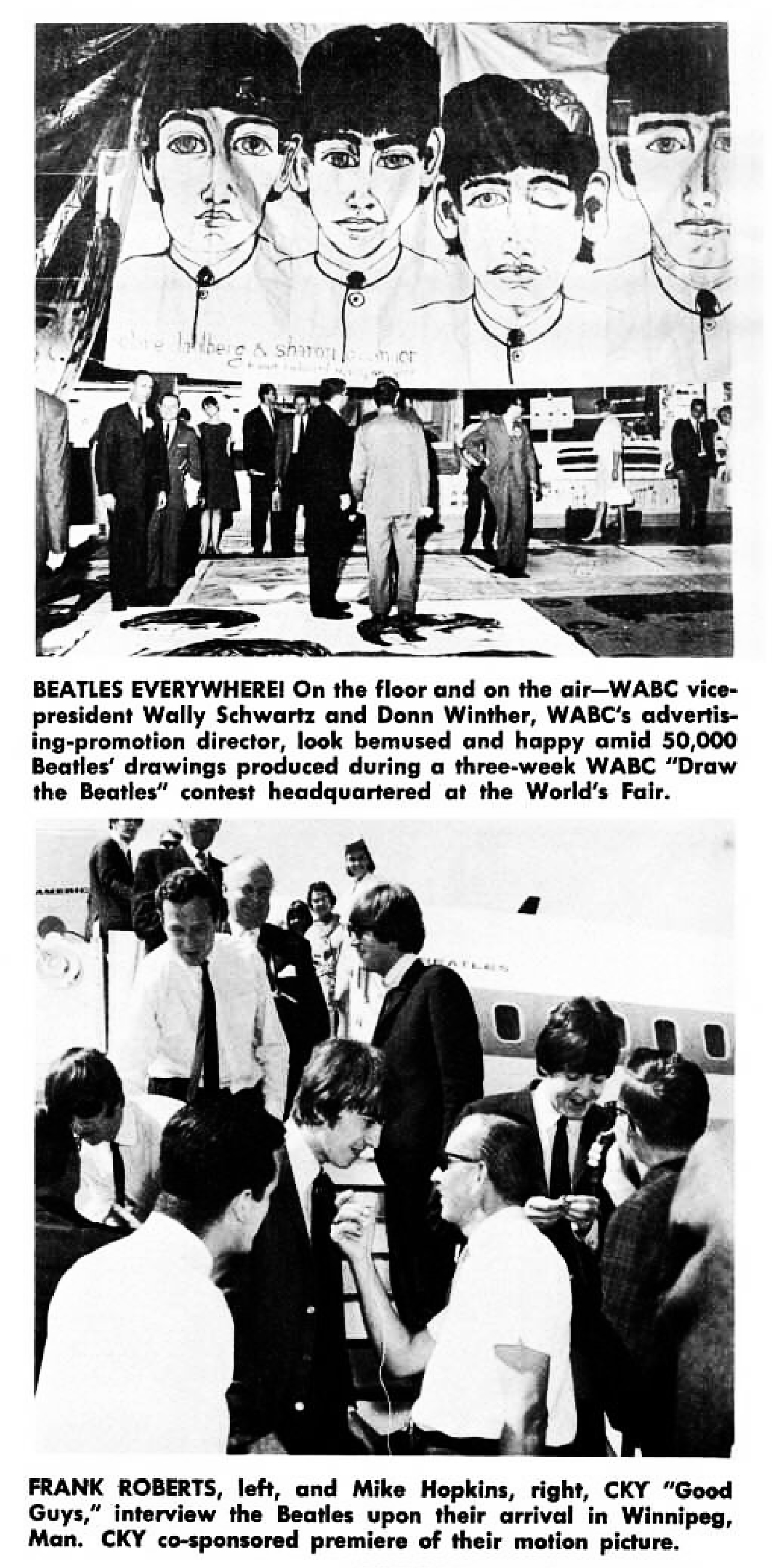
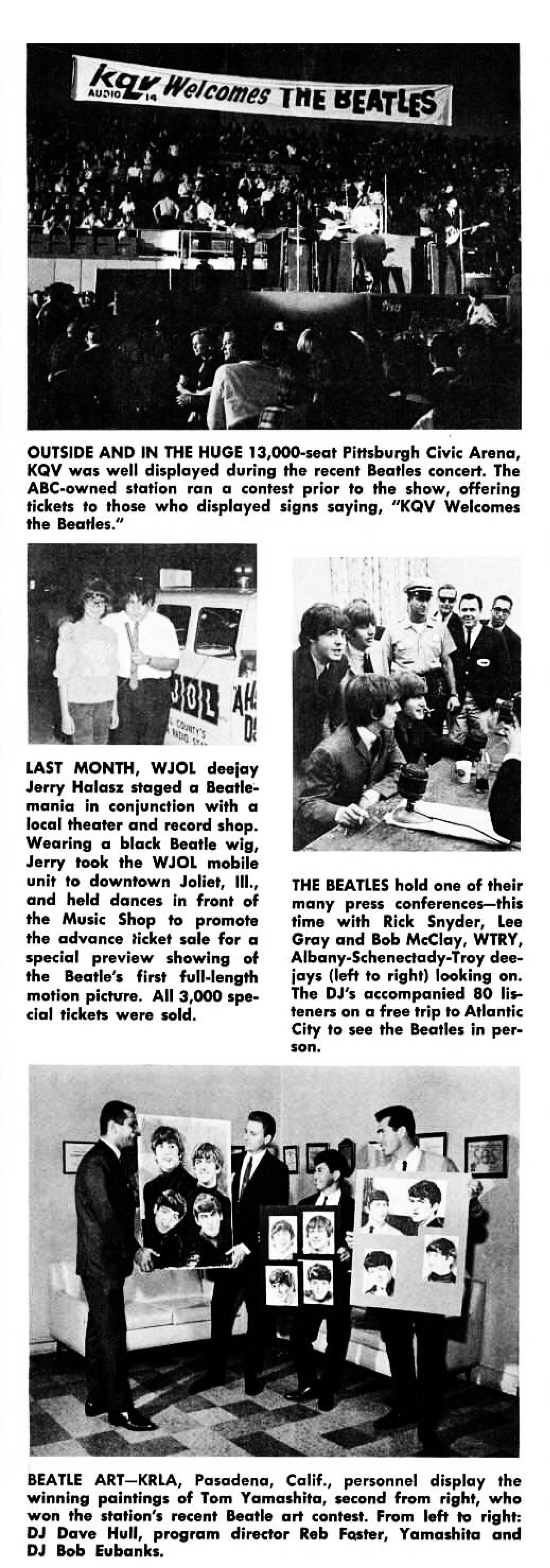
Nearly every conceivable type of contest and promotional tie-in with the British group has been tried by stations here and in Canada.
CHWO, in Canada, conducted a “Beatle Bonanza” in connection with the showing of “A Hard Day’s Night.” A special phone answering switchboard set up to handle the calls was swamped and eventually broke down. KDKA’s promotion manager, Owen Simon, and 17 other station staffers went into the streets of Pittsburgh with 40 tickets to the movie. WOWO, Fort Wayne, Ind., “Pussycats” were similarity beaten in a group singing honors. The “Pussycats,” comprised of deejays from WOWO, were edged out in a contest which drew 52,000 postcards during the three-week battle.
WIBC, Indianapolis, selected 35 questions from more than 3,500 submitted by listeners to he relayed to the Beatles in London. They recorded their answers, sent the tape to WIBC and the WIBC Beatles Press Conference became a ruddy success. The station was also designated as the “Mid-America Chapter of the Beatles National Fan Club.”
Both WQAM and WFUN iMiami, flew a planeload each of listeners to the Beatle concert in the Gator Bowl. The stations ran contests to pick the lucky entourage. WJZ -TV, Baltimore, ran a “Beatles Forever Contest” in conjunction with the station’s “People Are Talking” program. The grand prize winner received an all-expense-paid trip for two to Pittsburgh to see the Beatles. Toronto was typical of the cities that experienced personal Beatle visits.
CHUM garnered all of its manpower to cover the event and featured broadcasts from the hotel lobby while George Harrison’s sister Louise (flown to town courtesy of CHUM) broadcast her comments from a suite overlooking the hotel entrance.
The next day – Beatles Day – every second record played by CHUM was by the Beatles. CHUM played a part during and after the concert at Maple Leaf Gardens.
One of the footnotes to Beatlemania was the WGUY, Bangor, Me., ban on Beatles records which resulted in a group of teenagers picketing the studios.
In announcing the Beatles disk ban, William Hart, general manager of WGUY, declared the station would “no longer be part of a drive to build a Beatle empire.” END
___
(Information and news source:Billboard; October 10, 1964)
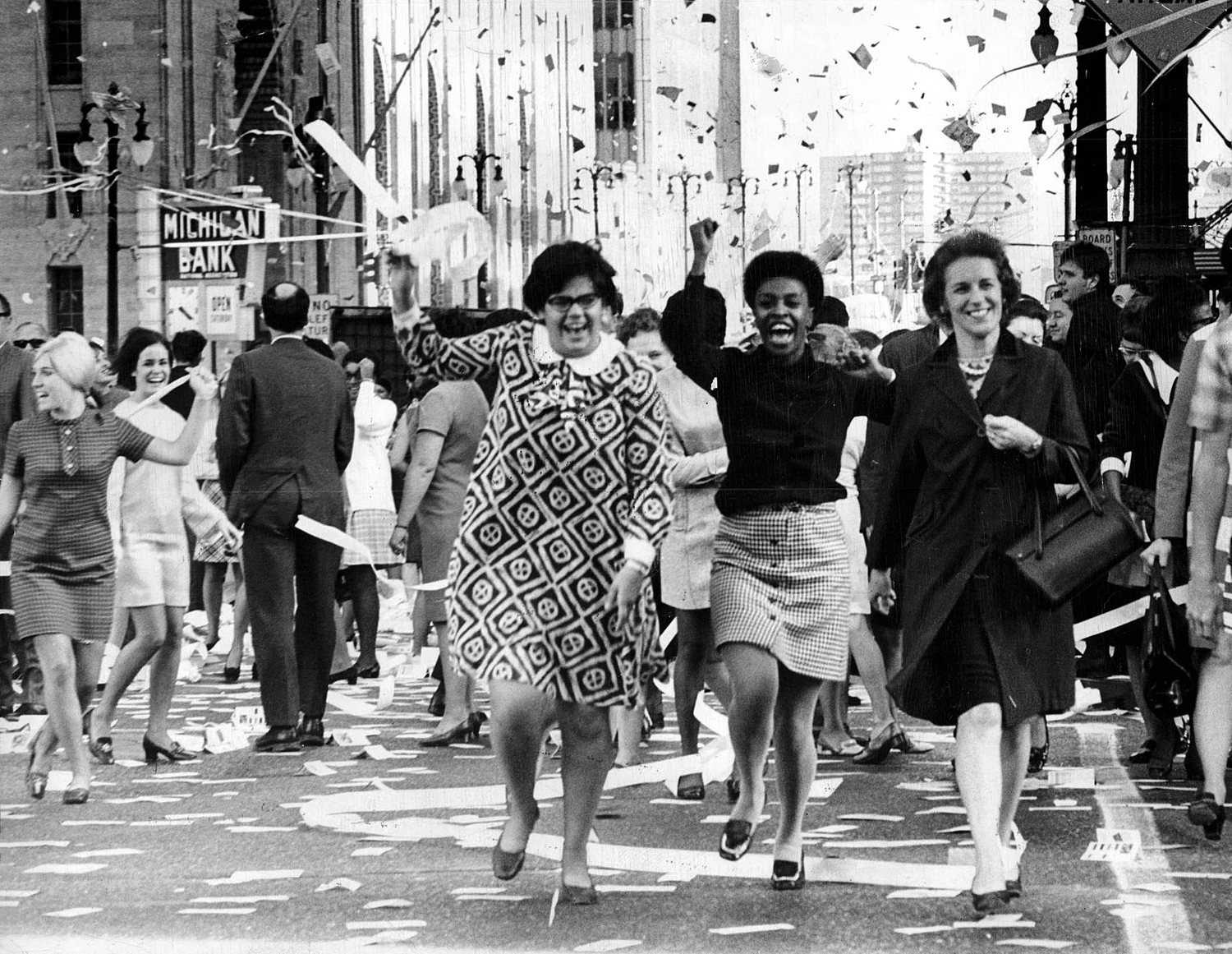
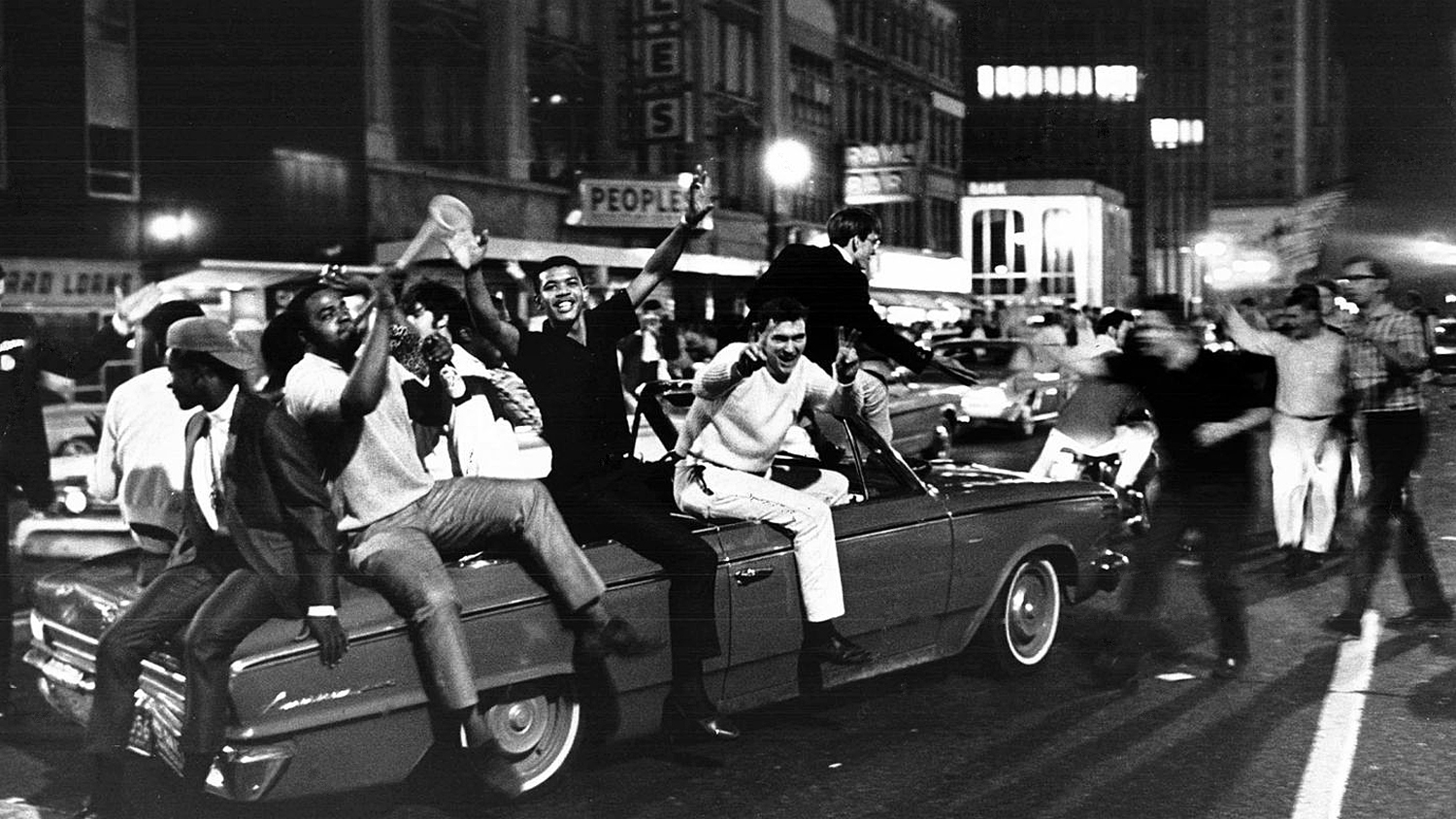
Joy in Tiger Town 4:20 p.m., Thursday, October 10, 1968(Photo courtesy Detroit Free Press archives)
Detroit Tigers fans revel through Detroit downtown streets over the Detroit Tigers 1968 World Series victory over the St. Louis Cardinals, October 10, 1968.(Photo courtesy AP)
Jubilation! Detroiters celebrate through the night in series championship. Thursday, October 10, 1968(Photo courtesy Detroit Free Press archives)
Detroit Free Press Friday, October 11, 1968
— ACKNOWLEDGEMENT —
A special THANK YOU to CKLW’s Charlie O‘Brien for sharing this (10/10/1968) Don Patrick 20/20 News memory with Motor City Radio Flashbacks.
— THE 1968 WORLD SERIES on NBC RADIO —
Motor City Radio Flashbacks featured the seven games of the 1968 World Series to commemorate the Detroit Tigers World Series victory over the St. Louis Cardinals — fifty years ago — last year in October.
All seven games of the 1968 World Series broadcasts over the NBC Radio Network is archived on this site,HERE.
*****
On your mobile device? Tap over newspaper images. Open to second window. “Stretch” image across your device screen to magnify for largest print view.
On your PC? Click on all newspaper images 2x for largest print view.
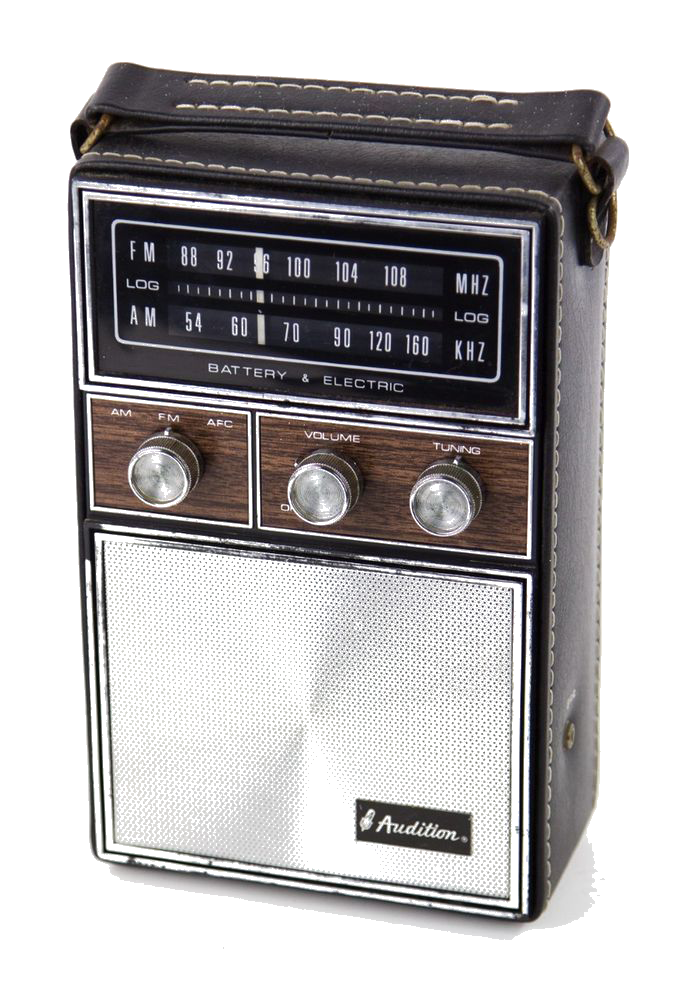
Ascension of FM Radio Popularity Stokes Consumer Choice For 2 Band Radios, 1965
CHICAGO – Dealers have been reporting a revolution in radio sales that could see AM-only models go the route of 78 r.p.m. There is one exception to the trend: low-end AM portables in the $5-$10 range which serves as the vital link between the teenager and his rock ‘n’ roll radio station.
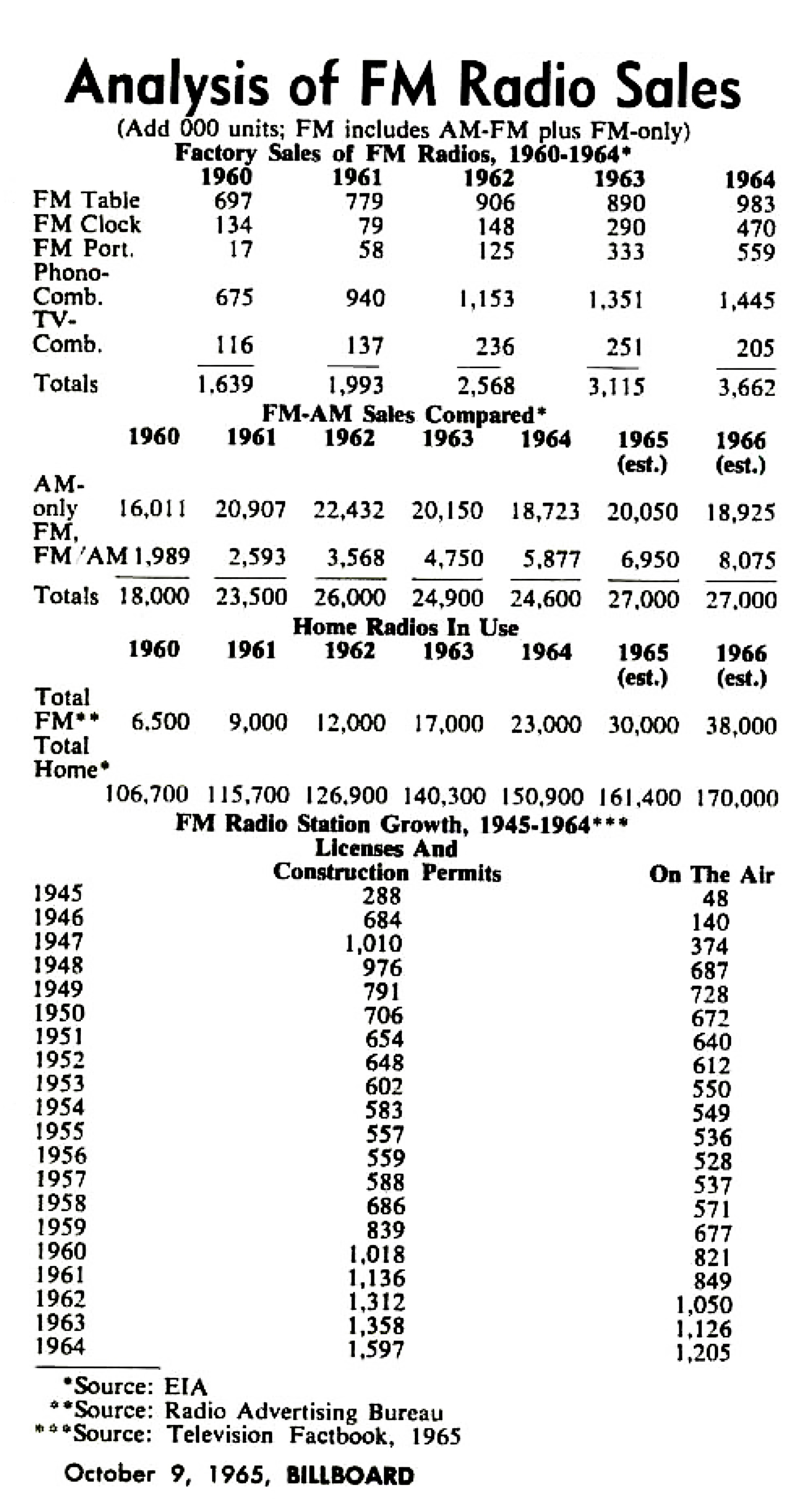
“Even in the moderate-cost table lines our customers want AM FM,” goes the typical dealer observation. The changing market is clearly reflected in factory sales figures just released by the Electronic Industries Association. And one need not go too much further in search of an explanation than the record of FM station growth during recent years (see chart below).
Sales Tripled
EIA figures show that sales of auto and home radios equipped to receive FM have more than tripled since 1960. An increase of 40 per cent above 1964 is expected before the end of next year. In 1960 – the year FM really started to catch hold – one FM receiver was sold for every nine radios purchased. Last year one of every four radios sold could receive FM. By 1966, EIA expects the ratio to increase to one of three.
AM-only sales have hovered between 16 and 20 million since 1960. Some 20 million of these sets are expected to move this year. Of the domestic-brand FM sets sold, the EIA has found that some 40 per cent are incorporated in phonographs, 25 per cent are table models and the remainder are portable or combined with clocks and TV sets.
Portables Lead
Portables have registered the highest rate of FM sales increase. Radio Advertising Bureau statistics indicate that 23 million FM sets were included in the 151 million reported in home use today. This share is expected to rise to 30 million of 161 million this year and 38 million of 170 million in 1966.
The increase in FM model sales has remained in step with FM broadcasting growth. While set sales have tripled since 1960, station number has increased from 821 in 1960 to 1,205 in 1964.
___
(Information and news source: Billboard; October 9, 1965)