Vinton Laments Chart-toppers Not As Demanded Today As Previous Years
Bobby Vinton 1963
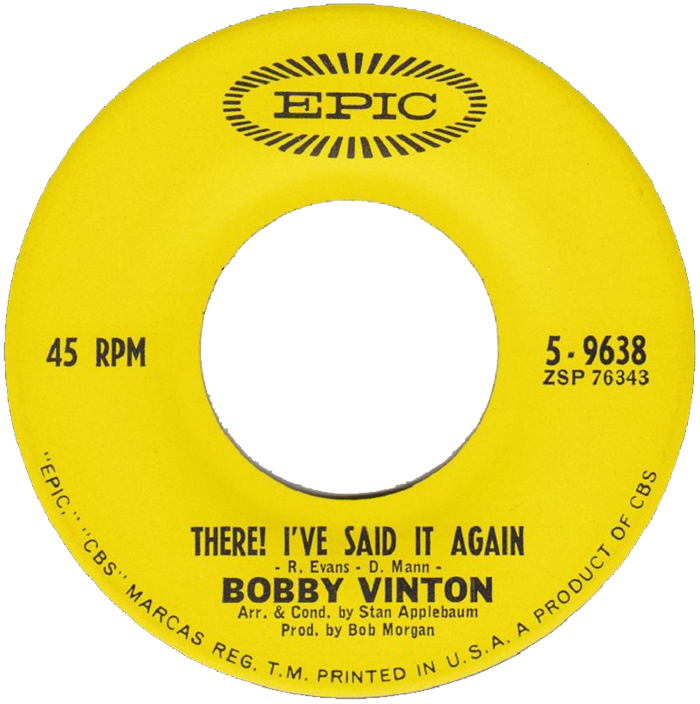
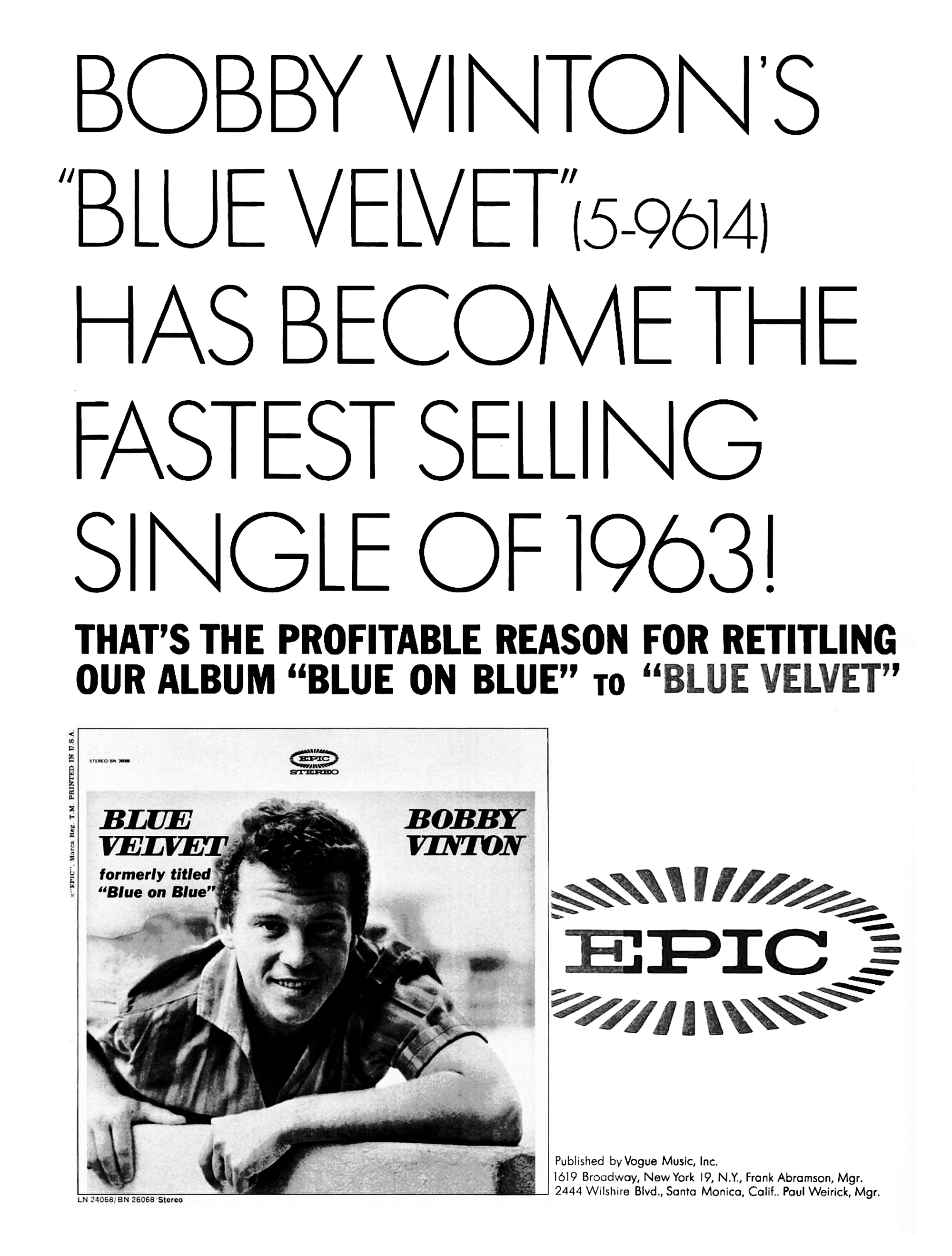
HOLLYWOOD — The power of havingthe No. 1 record in the nation seems to have diminished, claims Bobby Vinton, whose disk of “There! I Said It Again” and before that “Blue Velvet” haven’t opened as many magic doors as would have been the case five years ago.
“I’ve talked to several other young performers,” Bobby told Billboard, “and they’ve come to the same conclusion. Times have changed and having the No. 1 record in the country just doesn’t excite television producers and night club owners anymore.”
Vinton, who has been with Epic three years, is currently developing his night club act but finds it frustrating not being able to crack prime time television as easily as the disk artists of five years ago were able to do.
Vinton says he’s been told that TV producers think of him as a rock and roll artist mainly because he’s hit the No. 1 position. “They don’t listen to radio stations which play my records so they have no idea what I sound like and they’ve got me pegged as a strictly teen artist.”
The 25-year -old vocalist theorizes that perhaps one of the reasons for the decline of the disk artist in importance to the TV producer is that the producers had enough of fast rising disk names who only had a sound on record and did not come across effectively on the screen. “These people probably feel they’ve learned a lesson and are staying away from record people.”
During Vinton’s career with Epic he has had three No.1 disks and three more in the top 20. Yet his national TV work has been limited to the Dick Clark, Steve Allen and Lawrence Welk shows.
Besides emphasizing that talent buyers aren’t listening to top 40 stations, Vinton says people in the music industry feel that when an artist has the No.1 record “he’s home.”
“You’re not,” he claims. In Vinton’s case he knows he has to change his teenage image if he wants to crack the few variety format shows available on TV.
Citing Jack Jones and Wayne Newton as two new performers who don’t have a teen image, Vinton wonders whether they too might have been pegged as rock and rollers had they hit the glamorous top spot on the charts. END
_______________
Information and news source: Billboard; February 8, 1964
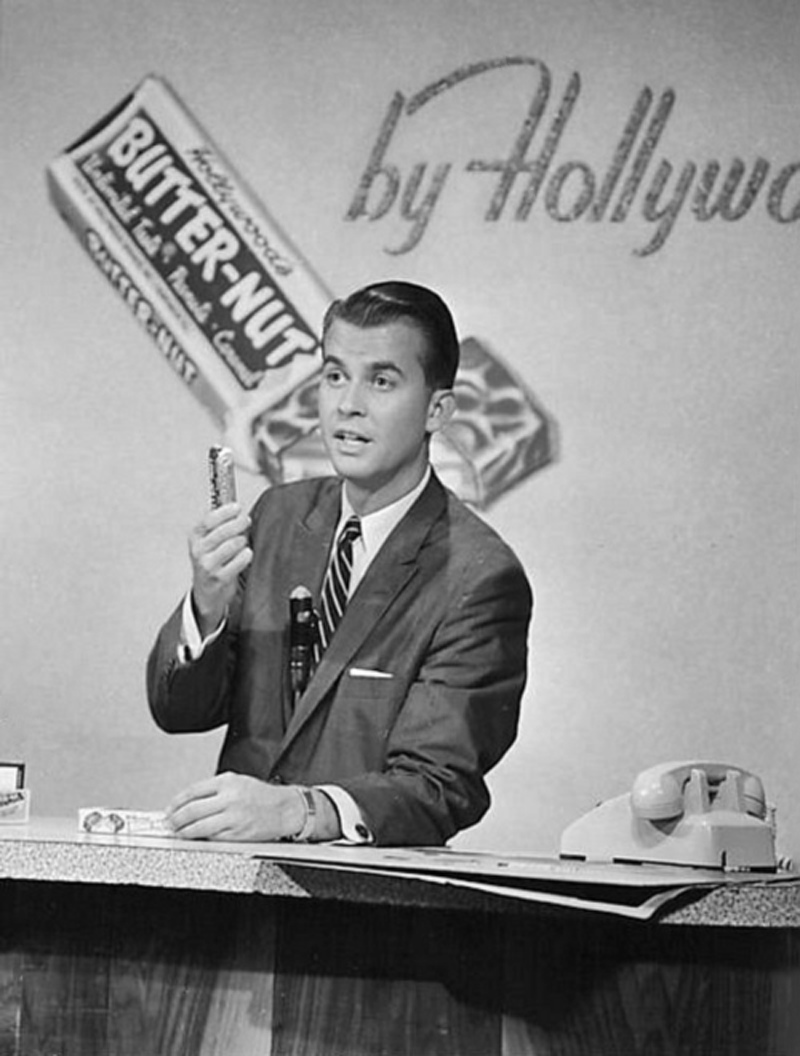
The Dick Clark Beech-Nut Show debuts on ABC-TV, February 15, 1958
The Dick Clark Saturday Night Beech-Nut Show was Dick Clark’s second attempt at a prime time show. His first, a prime-time version of American Bandstand, ran only 13 weeks.The Beechnut Show was much more successful lasting almost 3 years.
The Dick Clark Saturday Night Beechnut Show was broadcast live, on ABC-TV, Saturday nights from the Little Theatre in New York City. Every weekend, Dick Clark commuted from Philadelphia to NYC to do the “Beechnut” show.
There was actually two shows done each Saturday. The first was a rehearsal show where the artists could sketch out their performances and Clark could line everything up. This would have a different audience then the second show which was the one that was televised.
Beechnut Gum was actually picked up as a sponsor for the third episode to the conclusion of the show’s run. The artists that appeared usually “lip-synched” to their records. Very few actually performed live.
This is the only show to be able to make the claim of having Buddy Holly,Ritchie Valens and the Big Bopper as guests (though on different episodes). All three were killed together in a plane crash on February 3, 1959.
Amazingly, Elvis Presley and Ricky Nelson, two of the biggest stars of the period, never appeared on the show. The first show aired on February 2, 1958 with guests Jerry Lee Lewis, Chuck Willis, Johnny Ray and the Royal Teens. The final show aired on September 10, 1960.MORE . . . .
Beech Nut Chewing Gum was the sponsor of this short-lived Dick Clark production three-years on ABC-TV from February, 1958 through September, 1960(Click image for larger view)
FLAVOR-I-F-I-C!
_______________
For our previous fourth installment four-video posting of ‘Saturday Night Beech-Nut Show with Dick Clark,’ published on MCRFB on November 4, 2015GO HERE.
Above information provided by TV.com. For the complete 1958-1960 Dick Clark Beech Nut Show summary and artist-appearance listing for every showgo over here to TVdb.com.
About the IFIC button seen worn by attendees in the Beech-Nut show audience? Well, it stands for ‘FLAVOR-I-F-I-C.’ As in Beech-Nut chewing gum! Special thanks to Edward Bowman for sharing that ‘trivia’ bit of information with Motor City Radio Flashbacks.
Motor City Radio Flashbacks will be showcasing these rare Dick Clark video presentations here on this website from time to time.
In this fifth installment, we present four video classics (below) from the Dick Clark Beech-Nut show as was first broadcast on national television during that memorable late-’50s rock and roll era, featured below.
_______________
FEATURING
_______________
THE CHAMPS (May 3, 1958) SAM COOKE (March 14, 1959) JACKIE WILSON (March 21, 1959) SANTO & JOHNNY (August 1, 1959)
Beech-Nut Chewing Gum: sole sponsor for Dick Clark’s Saturday Night Beech-Nut Show over ABC Television 1958-1960
Capitol Records Claim Beatles Under Label’s Sole Ownership In Court
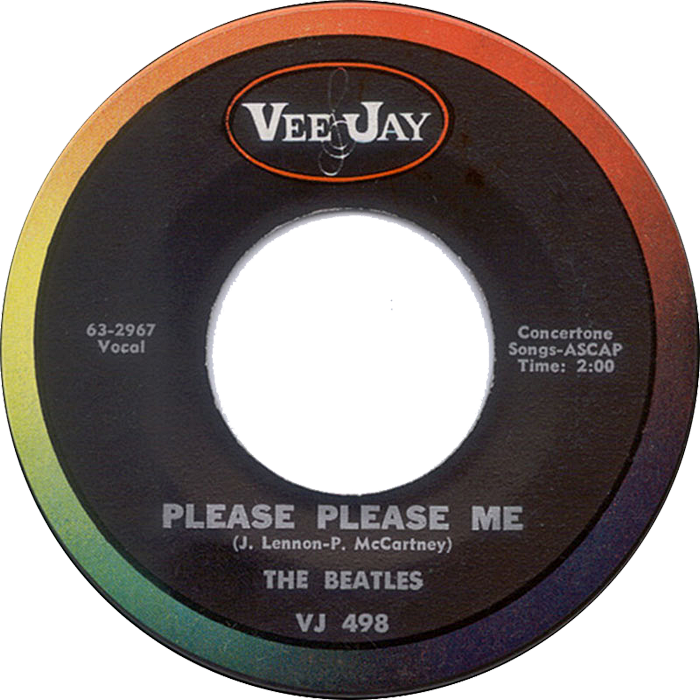
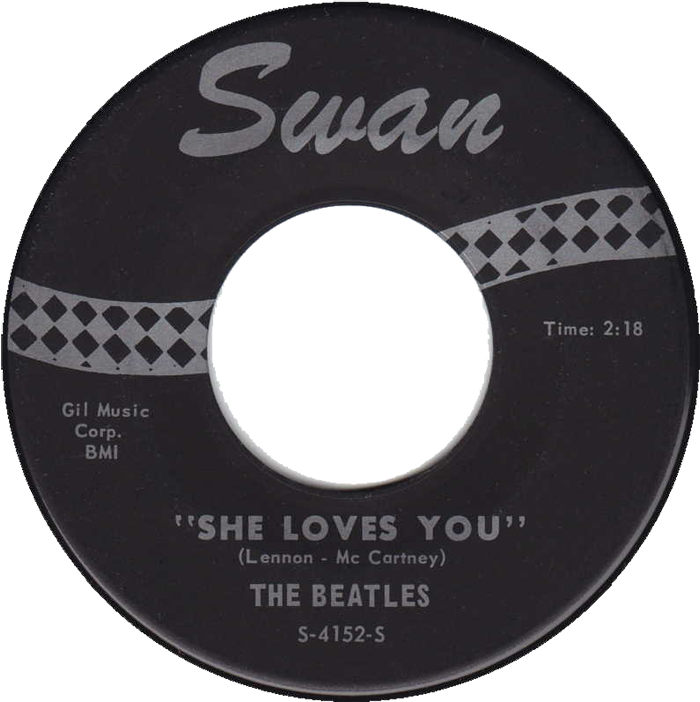
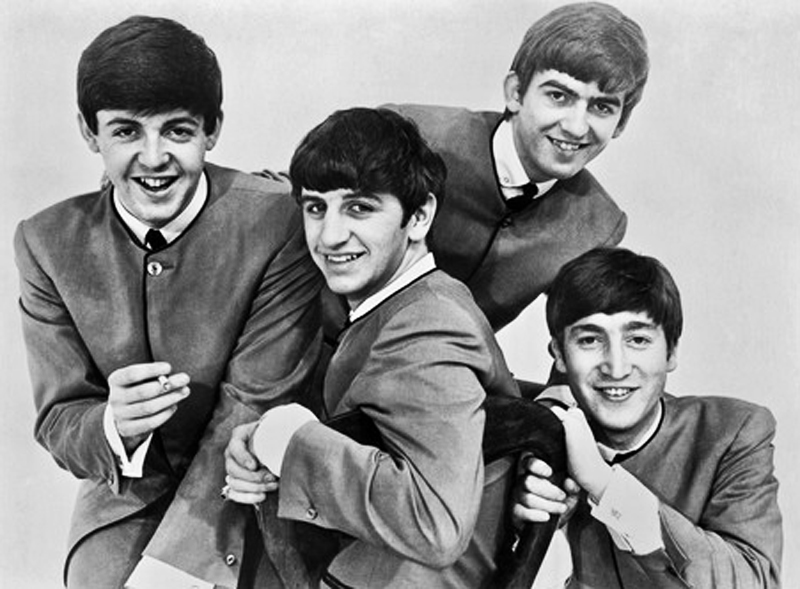
CHICAGO — The Beatles continued to generate their own peculiar brand of legal heat between Capitol, Vee Jay and Swan here last week.
An injunction issued in Circuit Court restraining Vee Jay from selling Beatles product is still in force. Vee Jay was denied a motion to dissolve the injunction by Judge Cornelius Harrington.
However, the Chicago-based recording company gave notice through its attorney Robert Downing that it had a right of appeal which it planned to exercise this week.
Meanwhile, a hearing on the merits of the case has been referred to a Master in Chancery, with a date not announced as of press time.
Also involved is a Capitol petition to have Vee Jay and M-S Distributing Company held in contempt of court for allegedly continuing to sell Beatles product.
The court denied M-S’ motion to be dismissed and ruled the Chicago distributorship had to answer the Capitol petition. This also will be done’ when the case is heard before the Master.
The legal maneuvering in the case has virtually matched the feverish excitement which the Beatles – oblivious to everything – are generating wherever they go.
At last Thursday’s hearing, counsel for Capitol, Vee Jay and M-S Distributing Company easily outnumbered the handful of spectators in the courtroom.
At one point, four teen-age girls entered quietly, evidently hoping to catch a glimpse of the mop-headed English four, but left after it became apparent this was an afternoon for serious matters only. END
_______________
Information and news source: Billboard; February 8, 1964
Debuted #69 week-ending January 25, 1964, 3 weeks playing the Billboard Singles chart, “She Loves You” climbs to #7, this week, February 2 through (week-ending) February 8, 1964.
Debuted #68 week-ending February 1, 1964, 2 weeks playing the Billboard Singles chart, “Please Please Me” climbs to #57, this week, February 2 through (week-ending) February 8, 1964.
British Chart-Toppers’ Fame and Popularity Spurs Rapid-Climb in U.S. Record Sales
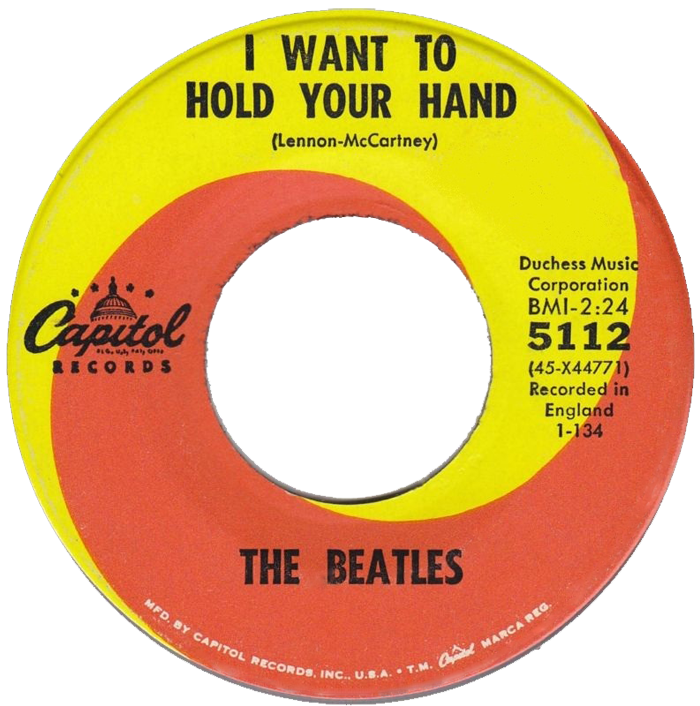
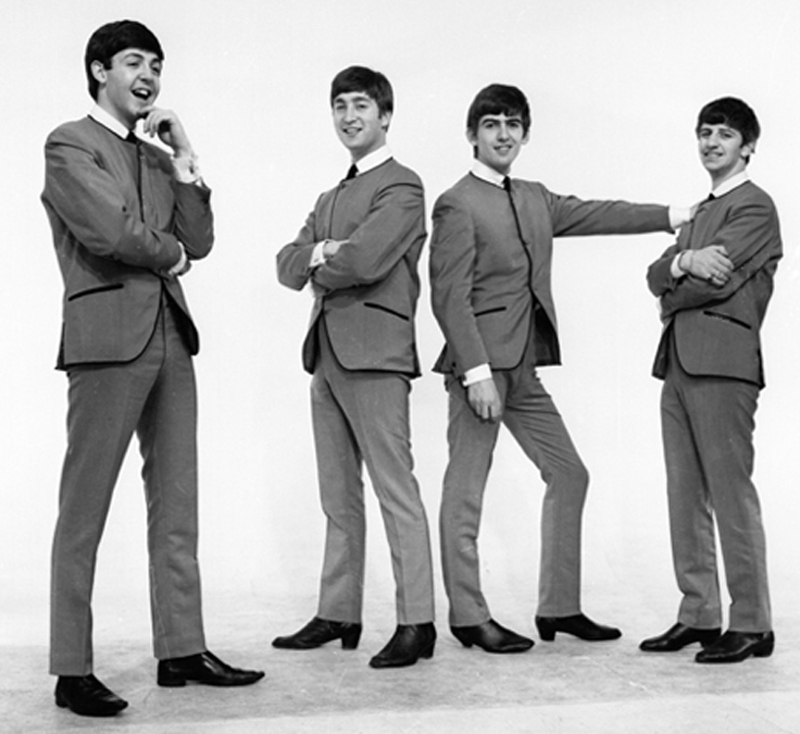
LONDON — The Beatles are certain to establish Britain’s biggest ever selling single in the world with “I Want To Hold Your Hand.”
Home sales of 1,550,000 make it the biggest-ever seller in Britain (sales of “She Loves You” are less than 50,000 behind it here) and with American sales added to totals increasing rapidly in other parts, the record must top the Tornados’ three-million seller, “Telstar.”
Under the direction of their producer, George Martin, the Beatles waxed the follow-up to “I Want To Hold Your Hand” at the Pathe Marconi Studios in Paris last week — there was not sufficient time for the group to record in London between the completion of their Paris stint and their departure for New York.
The new song is virtually certain to be one of those written by Beatles John Lennon and Paul McCartney (they write all the group’s material) for inclusion in the United Artists film which goes into production at the end of this month starring the Liverpool foursome.
During their Parisian sessions the Beatles also waxed “I Want To Hold Your Hand” in German.
Next week the Beatles make their U. S.concert debuts at Washington’s Uline Arena (Feb. 11) and New York’s Carnegie Hall (Feb. 12). George Martin, who will be in New York to record Shirley Bassey at the Carnegie Hall (Feb. 15) is still considering waxing an album with the Beatles there.
His decision will be literally last-minute for it is dependent on John and Paul having written sufficient new material for their act to make up an original LP — and they write their songs overnight.
Their staggering success in Britain continues — a paperback titled “Meet The Beatles” has become the hottest thing on the bookstalls and at lightning speed has become only the eighth paperback to notch up one million sales in this country. A leading manufacturer is having difficulty in keeping up with the demand for his latest line — Beatles wallpaper! END
_______________
Information and news source: Billboard; February 8, 1964
Note: It bears noting this article was published by Billboard, Saturday, February 8. The eve of The Beatles first U.S. television appearance on CBS’ Ed Sullivan Show, Sunday night, February 9, 1964. Fifty-seven years ago.
A CLASSIC BILLBOARD MOTOWN /TAMLA RECORDS AD PAGE RIP February 8, 1964
— MARY WELLS —
MOTOWN RECORDS 1962-1963
_______________
“What’s Easy for Two Is Hard for One” (also known as “What’s Easy for Two Is So Hard for One“) is a song written and produced by Smokey Robinson and released as a single by singer Mary Wells for the Motown label.
Wells’s teaming with Robinson led to a succession of hit singles over the following two years. Their first collaboration, 1962’s “The One Who Really Loves You”, was Wells’s first hit, peaking at number 2 on the R&B chart and number 8 on the Hot 100. The song featured a calypso-styled soul production that defined Wells’s early hits. Motown released the similar-sounding “You Beat Me To The Punch” a few months later. The song became her first R&B number 1 single and peaked at number 9 on the pop chart.
The success of “You Beat Me to the Punch” helped to make Wells the first Motown star to be nominated for a Grammy Award when the song was nominated for Best Rock & Roll Recording in 1963.
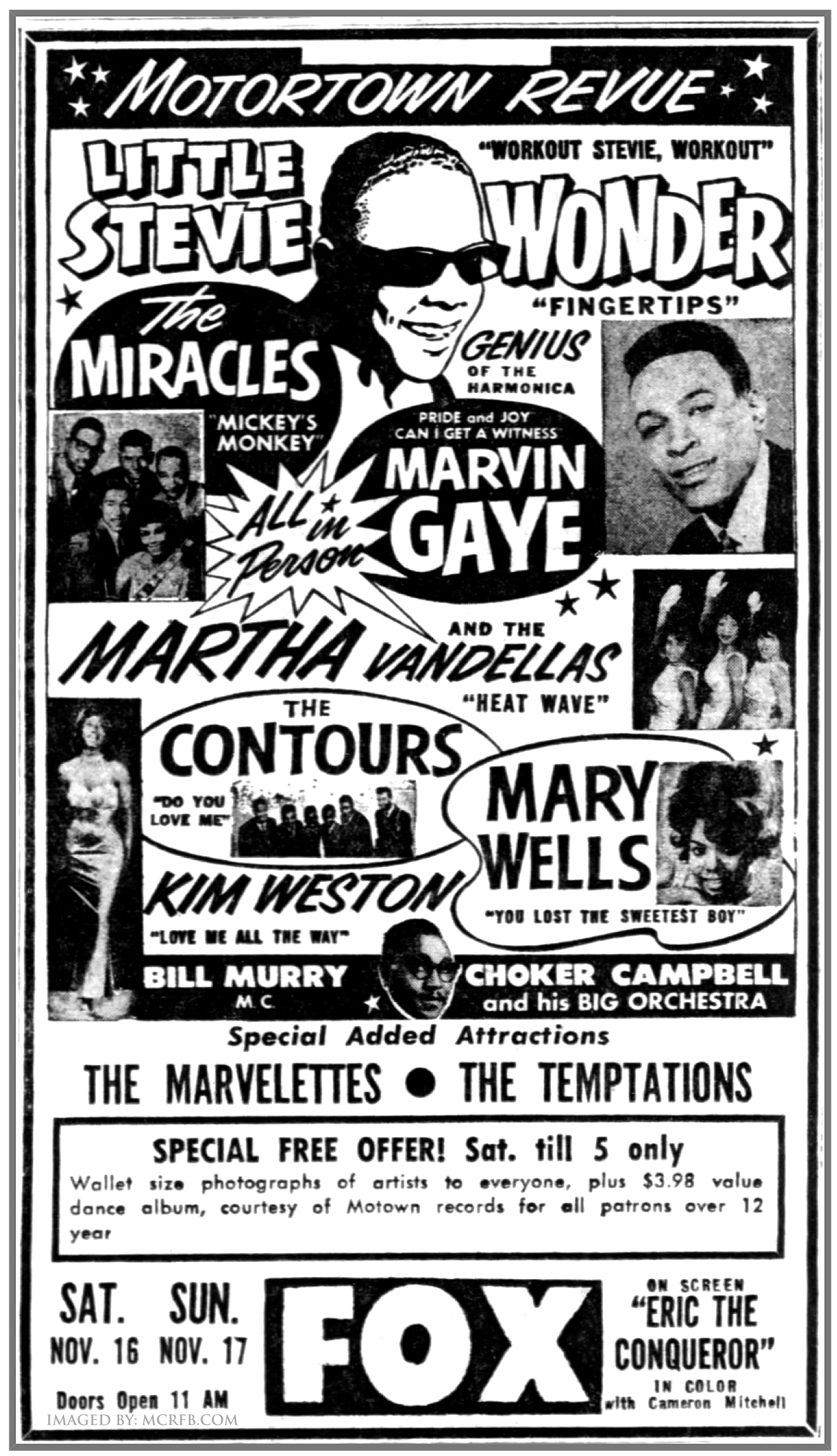
Motor Town Revue newspaper ad, featuring Mary Wells November 10, 1963(click image 2x for largest view)
In late 1962, “Two Lovers” became Wells’s third consecutive single to hit the Top 10 of Billboard‘s Hot 100, peaking at number 7 and becoming her second number 1 hit on the R&B chart. This helped to make Wells the first female solo artist to have three consecutive Top 10 singles on the pop chart. The track sold over one million copies, and was awarded a gold disc.
Wells’s second album, also titled ‘The One Who Really Loves You’, was released in 1962 and peaked at number 8 on the pop albums chart, making the teenage singer a breakthrough star and giving her clout at Motown. Wells’s success at the label was recognized when she became a headliner during the first string of Motortown Revue concerts, starting in the fall of 1962. The singer showcased a rawer stage presence that contrasted with her softer R&B recordings.
The ‘First Lady of Motown’ 1962
Wells’s success continued in 1963 when she hit the Top 20 with the doo-wop ballad “Laughing Boy” and scored three additional Top 40 singles, “Your Old Standby”, “You Lost the Sweetest Boy”, and its A-side, “What’s Easy for Two Is So Hard for One”. “You Lost the Sweetest Boy” was one of the first hit singles composed by the successful Motown songwriting and producing trio of Holland–Dozier–Holland, though Robinson remained Wells’s primary producer.
Also in 1963, Wells recorded a session of successful B-sides that arguably became as well known as her hits, including “Operator”, “What Love Has Joined Together”, “Two Wrongs Don’t Make a Right” and “Old Love (Let’s Try It Again)”. Wells and Robinson also recorded a duet titled “I Want You ‘Round”, which would be re-recorded by Marvin Gaye and Kim Weston.
_______________
Source: Mary Wells; Wikipedia
Above featured Billboard Motown ad digitally restored by Motor City Radio Flashbacks
Released October 26, “What’s Easy For Two Is So Hard For One” peaked at #8 (charted 21 total weeks R&B overall) on the Billboard R&B chart in 1963 into 1964. B-side: “You Lost The Sweetest Boy”